The project began with a poster-size timeline that I made to carry with me while leading tours in Israel. The poster was useful for showing what period we were in as we visited various sites in the Holy Land. While leading those tours it struck me that it would be useful to have this timeline online somewhere and actually take time to walk people through it before they came on the tour. Thus work began with a developer an online timeline. We have been working on it now for almost eight years!

After several early tests it soon became apparent that computer screens generally don’t have enough real estate to display a proper timeline. It seemed possible, however, to build one that allowed the user to zoom into the timeline to find more information—like Google Maps. Numerous attempts were made in this direction. The first version was too heavy to run on mobile. We ended up scrapping this version and starting again with another codebase. This version worked better but we still had issues with the timeline skipping and centering when zooming, and it was still heavy. Managing multiple layers of data in a zoomable timeline also proved problematic. After the third try, and five years later, we finally had something that worked smoothly and fast.
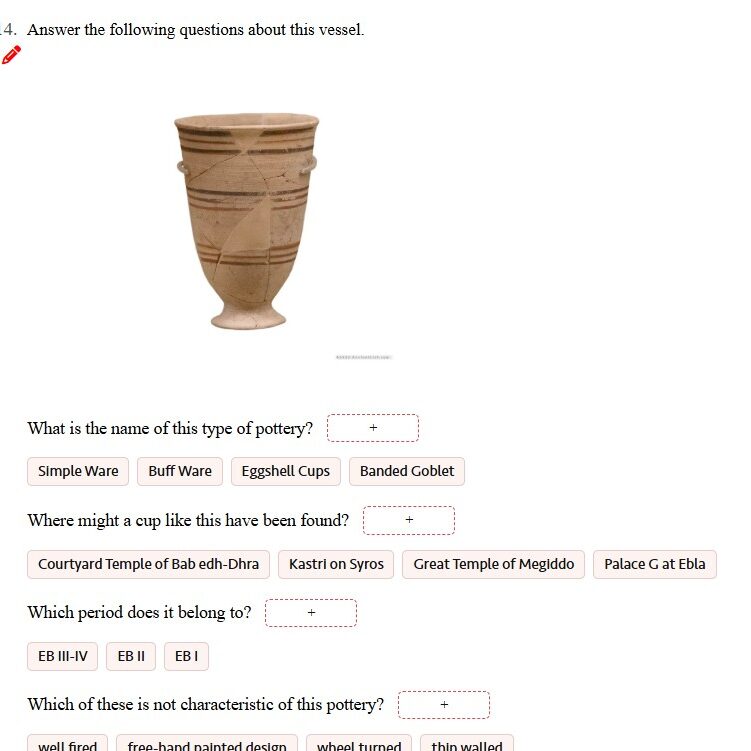
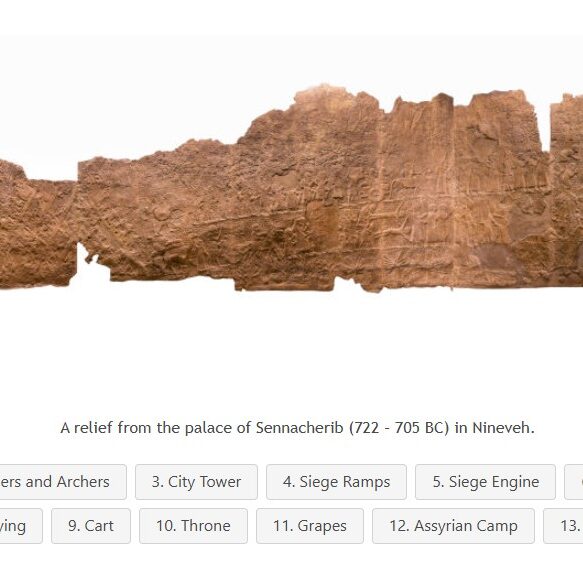
We also began to add more functionality to the site such as a database of references and a method for attributing images; we built a quiz module and course outline from scratch; and we added the ability to upload and view high resolution images of museum artifacts.
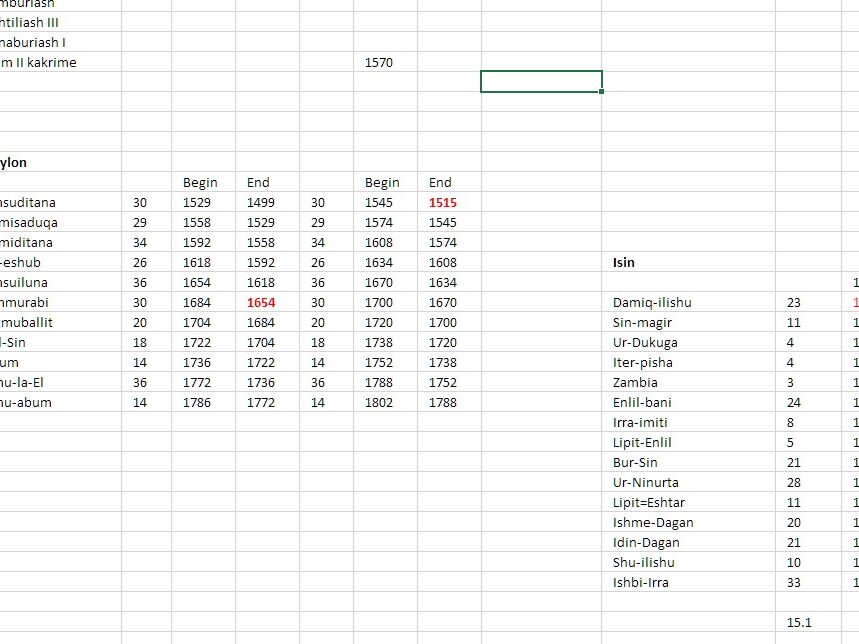
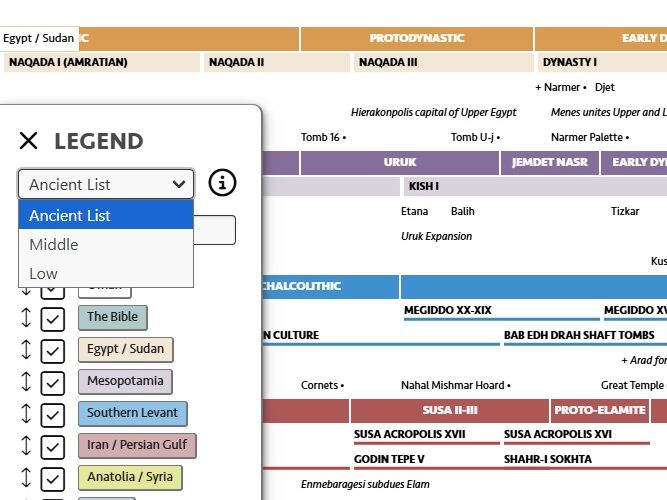
While entering data into the timeline, I tried to walk a fine line between creating a timeline which I believed to be accurate without departing too far from consensus. I thought it might be possible for the Bronze Age. However, as work progressed on the project, I found that I was working with two timelines: one you are likely to find on Wikipedia or Chat GPT, and another which I think makes better sense of the data, especially as it relates to the Early Dynastic I and II in Mesopotamia and the Ghassulian in the Levant. It became necessary at that point to add the ability to display multiple timelines. These are a work in progress. There is still a lot of work to be done in this area!
Although I set out to write a broad historical overview of the ancient world, I ended up writing a more in-depth study of the Early Bronze period. There was too much good content to skip over and too many interesting questions I wished to address. The Early Bronze Age is a pivotal period; it is when many important technologies came on the scene; and it is the logical launching point for an investigation of earlier periods.
The natural next step is to expand the timeline to encompass the Stone Ages. However, there are not many resources to pull from for these early periods that do not have C14 dating, thermoluminescence dating, or some other geological clock as their primary dating method, and are not wedded to a methodologically naturalistic interpretation of the evidence. (I discuss the problems with C14 dating in the Early Bronze course. These problems only increase with age.) I hope to address the stone ages at some point. To this end I will begin to add collections of artifacts for these periods. But I do not plan to go any further than that this year.
My focus this year will be on events, artifacts, and places which touch on the book of Isaiah. I need a break from the bronze and stone ages. I have a number of partially completed writeups which I will also continue to publish. (My most recent are The Amman Citadel and The Silver Scrolls). These writeups can be found under Collections>Entries. Other short-term goals for the project include the addition of historical data to the timeline for Armenia, Iran, India, and China, and the addition of a new course The Three Orders, the first section of which is mostly written but needs a lot of editing.
I did not intend to write a New Years resolution, but there it is. May God bless you and yours in the year to come! And may the Lord have mercy un us!