Where to Begin?

The Stoic philosopher, Epictetus (late 1st century AD), emphasized the importance of education for living a moral life.

“They are thieves and robbers,” you may say.

What do you mean by thieves and robbers?

“They are mistaken about good and evil.”

Ought we then to be angry with them, or to pity them? But show them their error, and you will see how they desist from their errors.

Epictetus goes on to argue that the thief and the robber are simply ignorant of what is good.  They suffer from a deficiency in moral faculties like that of a person who cannot see.  If the thief understood his true good, he would not have done it!  Thus, there is no real basis for retributive justice.

“Ought not then this robber and this adulterer to be destroyed?”

By no means say so, but speak rather in this way:

“This man who has been mistaken and deceived about the most important things, and blinded, not in the faculty of vision which distinguishes white and black, but in the faculty which distinguishes good and bad, should we not destroy him?”

If you speak thus, you will see how inhuman this is which you say, and that it is just as if you would say, “Ought we not to destroy this blind and deaf man?” But if the greatest harm is the privation of the greatest things, and the greatest thing in every man is the will or choice such as it ought to be, and a man is deprived of this will, why are you also angry with him? Man, you ought not to be affected contrary to nature by the bad things of another. Pity him rather: drop this readiness to be offended and to hate, and these words which the many utter: “These accursed and odious fellows.”

The robber is like the blind and the deaf and so we ought to pity him instead of judge him.  Knowledge is the solution.  Educate him to his true his good and he will turn from his ways!

The essence of Greek philosophy may be summed up in the two words inscribed on a plaque and placed above the door of the temple of Apollo in Delphi: “Know Thyself”.    The gnostic sects that emerged in the late Roman period likewise emphasized the importance of self awareness.

 “Ignorance is slavery. Knowledge is Freedom. Seeking the Truth, we discover its seeds within us. If we unite with It, It will receive us in the Primordial Consciousness.”  (“The Gospel of Phillip,” The Gnostic Society Library, http://gnosis.org/naghamm/gop.html)

Although modern humanism is more secular in outlook, it also begins and ends with man.  And it also places a great deal of faith in education.

Know then thyself, presume not God to scan; The proper study of mankind is man.  (Alexander Pope, An Essay on Man, Epistle II)

In contrast, the Bible tells us that we can and must know God, that we do not begin to live apart from God, and that only through the knowledge of the Holy One do we come to a true understanding of ourselves.  The fear of the LORD is the beginning of wisdom.

In the year that King Uzziah died I saw the Lord… and I said Woe is me, for I am lost!  (Isa. 6:1a,5a ESV)


Where are we?

Todo, I have a feeling we are not in Kansas anymore.  We must be over the rainbow!  – Dorothy

The traditional way of life in America and Europe is actually quite unique when viewed alongside other models for civic society.  Many of the recent changes to our laws bring us closer to Greek ideals for society which in turn share striking similarities to 19th century Socialistic theories.

Plato’s Republic:

  1. The Unborn / Newborn – It is lawful to expose a newborn child if it is not convenient. 1
  2. The Aged and Sick – Medicine is dispensed according to the value of that individual to society.   Although euthanasia is not actively endorsed, medicine may be withheld.   2
  3. Equality of Sexes – Men and women strip naked and exercise together so that all barriers between the sexes may be destroyed.  Women fight alongside men in the military.  3
  4. Children – Children are raised by a state appointed Nanny.   4
  5. Marriage – consists of temporary unions arranged by the casting of lots at a fertility festival.  Philosophers rig the system in order to ensure that desirable traits are selected and propagated in the children. 5
  6. Sex – Sex is reduced to its purely natural and physiological functions.  Homosexuality and pederasty are the norm.  6
  7. Education – Man is saved through education.  The philosopher who serves his city is guaranteed a place on the Island of the Blessed in the next life.
  8. Property – Property and homes are shared among the Guardian class.  7
  9. Government – The city is ruled by philosophers.  Honesty is taught as a virtue for commoners and the guardians but philosophers / rulers are allowed to lie for the good of the people.  All natural relationships such as that between husband and wife and between child and mother must ultimately be dissolved in the State.  8
  10. Religion – Myths about the gods are rewritten or new myths are invented to serve the needs of the State.  Religion and propaganda are indistinguishable.   God is resolved into an ideal and removed far away from everyday life.

Lycurgus’ Sparta

  1. The Unborn / Newborn- Deformed and unwanted children are thrown over a cliff.  9
  2. The Aged and Sick – The elderly are killed when they are no longer useful.
  3. Property – All means of production are communally owned.  Silver and gold money are forcibly exchanged for iron coinage.
  4. Marriage – Partners swapped freely.  10
  5. Sex – Pederasty is the norm.  At the age of 13 boys are chosen by older men. 11
  6. Family – Children are raised by the state. No concept of family to speak of.
  7. Women – No distinction between women and men. Both go to war.  Boys and girls danced naked together at religious festivals.   12
  8. Economics – The laboring caste was ruled by a warrior elite.  Spartan products were known for their utility and lack of artistry.
  9. Government – Society ruled by a warrior class that makes perpetual war.  Helots are condemned to perpetual serfdom.

19th Century Socialism in Europe (Fourier, Marx, Lenin)

  1. Marriage – It is a social convention that is easily annulled and ideally should disappear altogether. 13
  2. Sex – The suppression of natural instincts is harmful.  All instincts are equally fruitful and useful for society–it is only necessary to combine them and direct them in the proper way.  14
  3. Equality of Sexes – The goal of communism is the withering away of hierarchies.  Men and women should serve the commune without distinction.
  4. Family – Children should be wards of the state. 15
  5. Property – ‘Abolition of private property” 16
  6. Government – rule by technocrats who are the Absolute arbiters of truth and justice.  17
  7. Religion – The basic principles guiding the life of an individual and of mankind in general do not go beyond the satisfaction of material needs or primitive instincts.  (I. Shafarevich, 227)

Dostoyevsky recognized that the radical 19th century social experiments undertaken in Europe would lead to disaster.

“For socialism sets itself the task of solving the fate of mankind, not according to Christ but outside God and outside Christ, and it was natural for it to arise in Europe, on the ruins of the Christian principle in proportion to the degree that this had become degenerate and lost in the Catholic Church itself.” (Dostoyevsky, A Writers Diary, February 1877) “When Catholic humanity turned away from the monstrous image in which Christ was presented to them, then after many centuries of protests. ..there finally appeared, at the beginning of this century, attempts to arrange things outside God and outside Christ. Without the instincts of bees or ants that create their beehives and ant hills faultlessly and precisely, people undertook to create something like a faultless human ant hill. They rejected the formula for salvation which proceeds from God and was revealed as ‘Love thy neighbor as thyself’ and replaced it by practical conclusions such as ‘chacun pour soi et Dieu pour tous’ [every man for himself and God for all] or by scientific axioms such as ‘the struggle for existence.’  Lacking the instincts of animals. ..people placed great confidence in science, forgetting that for a task like the creation of society, science was still in its infancy. Dreams appeared. The future tower of Babel became the ideal and, on the other hand, the fear of all mankind. But the visionaries were soon followed by other doctrines, simple and to the point, such as ‘rob the rich, drown the world in blood and then everything will somehow arrange itself.’ ” (Dostoyevsky, A Writers Diary, November 1877)

The rebellion of man against God must ultimately must lead to the rebellion of man against nature.  One can see evidence of this rebellion all around us.

– The practice of feeding meat to herbivores resulted in a spectacular kind of disease – Bovine spongiform encephalopathy

– The Aswan Dam has destroyed the fertility of the soil (once the richest soil in the world), the Mediterranean sardine fishery, and Egypt’s fresh water supply.

– The demand by feminists to be treated like men has put an end to chivalry and resulted in unprecedented exploitation.

– The homosexual lifestyle has increased the risk of death from STD’s.

– The transfer of the responsibility for a child’s education from parents to the public education system has resulted in dumber and lazier kids.

– The erosion of the right to property through inflation and taxation has diminished the productivity of the average citizen and engendered a whole class of bottom feeders.

Modern man does not think twice about cooking a kid in it’s mothers milk.


Footnotes

  1. “…but the offspring of the inferior, and any of those of the other sort who are born defective, they will properly dispose of in secret, so that no one will know what has become of them.” (The Republic, 460c) As for a child born of unregulated sexual union, the following is indicated: “…to dispose of it on the understanding that we cannot rear such an offspring.” (The Republic, 461c)
  2. Physicians and judges “…will care for the bodies and souls of such of your citizens as are truly well-born, but those who are not, such as are defective in body, they will suffer to die, and those who are evil-natured and incurable in soul they will themselves put to death.” (The Republic, 410a)
  3. A man must have no more compunction about killing the advancing female enemy than the male, and he must be no more protective of the heroine fighting on his right side than of the hero on his left.”  (A. Bloom, The Closing of the American Mind)
  4. Parents ought not know their children: “…conducting the mothers to the pen when their breasts are full, but employing every device to prevent anyone from recognizing her own infant.” (The Republic, 460c)
  5. “These women shall all be common to all these men, and that none shall cohabit with any privately, and that the children shall be common, and that no parent shall know its own offspring nor any child its parent.” (The Republic, 457d)
  6. When Plato makes reference to a ‘lover’ in the Republic, he has a boy in mind and not a woman.
  7. “none have any habitation or storage area which is not open for all to enter at will.” (The Republic, in loc.)
  8. “It seems likely that our rulers will have to make considerable use of falsehood and deception for the benefit of their subjects.” (The Republic, 459d)
  9. And if they found the child “puny and ill-shaped, ordered it to be taken to what was called the Apothetae, a sort of chasm under Taygetus; as thinking it neither for the good of the child itself, nor for the public interest, that it should be brought up, if it did not, from the very outset, appear made to be healthy and vigorous.” (Plutarch, Lycurgus, 80)
  10. …the laws of other nations seemed to him (Lycurgus) very absurd and inconsistent, where people would be so solicitous for their dogs and horses… to pay money to procure fine breeding, and yet kept their wives shut up…  (Plutarch, Lycurgus)
  11. By the time they (Spartan boys) were come to this age there was not any of the more hopeful boys who had not a lover to bear him company. The old men, too, had an eye upon them, coming often to the grounds to hear and see them contend… (Plutarch, Lycurgus)
  12. It was their custom, during certain festivals, for young men and women to dance together naked and thereby to form a natural attraction for each other, not unlike uniting a herd of stallions with the mares.  (Plutarch, Lycurgus)
  13. “In future socialist society, where the obligation for the upbringing, education and maintenance of children will be shifted from the parents to society as a whole, it is clear that the family must wither away.” (125: p. 121) “It makes little sense for us to strive for an especially stable family and to regard marriage from that angle.” (Engels as cited in Shafarevich, The Socialist Phenomenon)
  14. Fourier writes, “All these philosophical whims called duty have nothing to do with truth; duty proceeds from people, while attraction proceeds from God. If you want to recognize God’s intentions, study attraction, only nature, and do not accept duty.”  Fourier also states, “There is not a single useless or bad passion; all personalities are good as they are.”  (Fourier as cited in I. Shafarevich, The Socialist Phenomenon, 227)
  15. “Monogamy arose from the concentration of great riches in a single hand–that of the man–and from the need to bequeath these riches to the children of that man and not of any other…. With the transfer of the means of production into common ownership, the individual family ceases to be an economic unit of society. Private housekeeping is transformed into a social industry. The care and education of children become a public affair; society looks after all children equally, whether they are born in or out of wedlock.” (I. Shafarevich, The Socialist Phenomenon)
  16. “It should be made clear that I do not consider the idea of rooms necessary; I believe that it will be possible to consider a room only as the living space of an individual person. After all, isolation in a room is quite unnecessary for collective man. …The isolation needed in certain hours of love can be had in special pleasure gardens where the man and his female companion will be able to find the necessary comforts.” (Marx as cited by I. Shafarevich, The Socialist Phenomenon)
  17. The party may be absolutely mistaken, it is said, it might call black something that is clearly and indisputably white. To all those who try to foist this example on me, I say: Yes, I shall consider black something that I felt and considered to be white, since outside the party, outside accord with it, there is no life for me. (I. Shafarevich, The Socialist Phenomenon)

Cosmos on Bruno

The cosmos is all that is, or ever was, or ever will be.

This is the opening line of the television series ‘Cosmos – A Spacetime Odyssey’ that aired on the Fox Network in 2014.  The statement is clearly inspired by a verse from Revelation, “to Him who is and who was and who ever shall be”.  (Rev. 1:4, 8)

Around 10 minutes of the first 50 minute episode were dedicated to telling the story of Giordano Bruno, the self-heralded apostle of a universal philosophy of reason and an early adopter of many enlightenment ideas.  He believed that the universe was infinite and that there were other worlds with earths just like our own. He believed in a gradation of being and suggested that life may even have evolved from lower life forms.  Bruno believed that the Bible was a book of religious mythology like Homer’s Illiad.

But what Cosmos fails to mention is that Giordano Bruno was also a pantheist and a devotee of the magical arts.   He spent most of his energy developing a theory about mind and memory that had no scientific merit.   Many of Bruno’s ‘scientific’ ideas were actually borrowed from bonafied scientists like Copernicus and Kepler who investigated the world from a Christian perspective.   In contrast to these scientists, Bruno conceived of the world as a living organism infused with divinity “working and growing differently in different subjects through diverse physical forms in certain arrangements”.  Bruno rejected the Christian God because he was a pantheist and not because he was a scientist.  I suspect that this is true of many in the Academy today as well.

The 1st episode of Cosmos takes us to the edge of the universe and tell us, ‘here is where it all began’.

… our entire universe emerged from a point smaller than a single atom. Space itself exploded in a cosmic fire, launching the expansion of the universe, and giving birth to all the energy and all the matter we know today. I know that sounds crazy but there is strong observational evidence to support the big bang theory…

Cosmos is content to pull a universe from a hat but most human beings are compelled to go one step further and ask, Why?   Why did it go bang?  Who pulled the rabbit from the hat?  If there is nothing above Nature, as Cosmos presupposes, then one is forced to conclude that Matter assembled itself into complex and specified forms.  It is not much of a leap from here to speculate that the universe is a living organism with a mind of its own or is in some way suffused with creative power.  This is the magical universe of Giordano Bruno and is the underlying reality of all pagan religion.  Dawkins and Tyson may not believe in the efficacy of magic but their cosmogony fully accords with it.  It is perhaps no coincidence they chose the renaissance magician par excellence, Giordano Bruno, as their hero.

Several places in the episode Tyson expresses awe at the way that life began.

Life began somewhere around here… 3 1/2 billion years ago. we still don’t know how life started. For all we know, it may have come from some other part of the milky way. The origin of life is one the great unsolved mysteries of science.  [Tyson standing beside the ocean and pointing to a tidal pool]  That is life cooking, evolving all the biochemical recipes for its incredibly complex activities…. Life was breathing, moving eating, responding to its environment. We owe a lot to those pioneering microbes. Oh yeah, and one other thing, they also invented, sex.

Why did Tyson add that last line?   In fact, there is no satisfying biological explanation for the origin of sex, or for bio-chemical evolution for that matter.  Tyson is peddling gaudy trinkets to teenagers.  This show represents the depths to which crass materialism has brought us.

Apparently, the Fox Network was not sure whether the show would be profitable but they chose to air it anyway.  Why?

Fox’s CEO Kevin Reilly considered that the show would be a risk and outside the network’s typical programming, but that “we believe this can have the same massive cultural impact that the original series delivered,” and committed the network’s resources to the show.  (Cosmos, Wikipedia)

References:

Giordano Bruno and Arthur D. Imerti, The Expulsion of the Triumphant Beast  (Lincoln: University of Nebraska Press, 2004). From the Introduction

Additional Notes:

Tyson: We [the ignorant masses] were the center of the universe – a universe made for us.  There was only one man on the whole planet who envisioned an infinitely grander universe. And how was he spending new year of the year 1600?  Why in prison, of course!  There comes a time in our lives when we first realize that we are not the center of the universe; that we belong to something much greater than ourselves, it is part of growing up, And as it happens to each of us, so it began to happen to our civilization in the 16th century.

Girodano’s speech to Oxford according to Cosmos: (I am not sure where this is sourced.  From what I have read, the content of the speech is unknown)

Bruno: I have come to present a new vision of the cosmos. Copernicus was right to argue that the earth was not the center of the universe. The earth goes around the sun. It is a planet just like the others. but Copernicus was only the dawn. I bring you the sunrise! The stars are other fiery suns made of the same substance as the earth. And they have their own watery earths, with plants and animals no less noble than our own.

Crowd:Are you made or merely ignorant. Everyone knows that that there is only one world.

Bruno: What everyone knows is wrong. Our infinite God has created a boundless universe with an infite number of worlds.

Crowd: Do they not read Aristotle where you come from, or even the Bible!

Bruno: I beg you, reject antiquity, tradition, faith, authority. Let us begin anew, doubting everything we assumed has been proven.

Crowd: Infidel! Heretic.

Bruno: Your God is too small!

Cosmos goes on to recount how Bruno was thrown into prison by the authorities in Venice.  After years of deliberation, the cardinals of the inquisition rendered their verdict.  Cosmos states the verdict as follows: (There is no record of the actual indictments so the following is speculation)

You have been guilty of questioning the holy trinity, and the divinity of Jesus Christ, of believing that gods wrath is not eternal, that everyone will be saved, of asserting the existence of other worlds. All of the books you have written will be gathered up and burned in St Peter’s square.

The inquisition and the Crusades have been flogged to death in modern histories.  A group can always find instances where they were persecuted by others.  Catholic Christians could point out what happened to them in the French Revolution (a far bloodier affair than all of the inquisitions of all the nations in the Middle Ages put together).  And Protestants could point to St. Bartholomew’s Day Massacre. The real interesting question is when and where has tolerance taken root, and under what conditions?

Free Trade?

I just listened to an interview by Charlie Rose of Jeffrey Immelt, CEO of General Electric, on Bloomberg.

http://www.bloomberg.com/news/videos/2015-06-16/ge-ceo-jeff-immelt-charlie-rose-06-16-

I disagree with Immelt completely.  What he calls free trade is not free trade at all.  It is a rigged system of global trade that favors large corporations to the detriment of local industry.  He repeats over and over again, “We can compete!”  Wrong!  YOU can compete!  But the company that electroplates car bumpers in the rust belt CANNOT compete.  It either moves its facilities to a place where environmental reg’s are more relaxed, or it goes bankrupt.  I remember attending the National Design and Engineering Show in Chicago and speaking with the owner of a large die-casting and electroplating facility.  I did not represent a large corporation with deep pockets and had very little knowledge of the manufacturing process but he still took the time to speak with me.  Afterwards his company provided us with a detailed quote.  They were hungry for work.  Ten years later, they are out of business.  Out of curiosity, I did a quick google search and found this notice:

On Monday, I heard about Joyners Die Casting Company is CLOSING. There will be an equipment auction on December 11, 2014 10:00 am CDT for the Joyner die casting equipment. This is very sad news indeed. Another USA die casting manufacturing company closure. This is a continuation of a long sad trend of US Manufacturing companies that struggle and can not stay in business due to EPA issues, employee issues, legal issues and struggles for quality and profit. All this information is available to anyone searching online. Now there is a loss of $10,000,000 in our United States manufacturing capacity. The ones who hurt the worst are the additional 100 Minnesota manufacturing employees who are unemployed and on the street just in time for Christmas.  (from here)

I know that we wanted to manufacture our product in North America but the costs were 2 or 3 times higher than in China.  Since then, I have sourced production for other items and the story has been the same each time.  North American producers are not competitive.  Part of the reason for this is that trade agreements have unequally yoked the economies of advanced nations to those of developing nations.  It doesn’t help the average citizen in either country but it does makes a few large multinational corporations incredibly wealthy. [1]

Kissinger,_Ford_and_Mao,_1975_A7912

Mao’s body was not yet embalmed in his mausoleum when the West began to build factories on the bones of the millions of Chinese peasants that Mao had starved to death.  Farmers who had never been allowed to own land became part of a vast and unprecedented migration into urban areas.  They formed a seemingly limitless pool of low cost labor for the factories now exporting primarily into Western markets.   The increasing urbanization of China’s population resulted in a rise in income but this did not necessarily translate into a rise in the standard of living.  This is because a rural farmer’s income may be supplemented by what he could glean from nature whereas an urban dweller must purchase everything at the market.  The GDP of tribal people living in grass huts is virtually imperceptible but they may still have a higher standard of living than many of the factory workers in China.

What if the Chinese economy had been allowed to develop naturally and the rice paddy farmer had been given an opportunity to get his feet under him?  No doubt China would be much better off.  Instead we have opened our borders to trade with a country that has not yet repudiated the central tenets of Communism.  We have taken advantage of their poverty and in the process, we have yoked our economy to theirs.  Now we will share in their fate.  That is what ‘free trade’ means.

IMG_0693
Taken from my hotel window in Shenzhen.  He was there every morning.


References

[1] Before 1995, most Haitian agricultural products – including rice – were protected by tariffs as high as 50%. But that year, a deal was forced on Jean-Bertrand Aristide’s government by the U.S., the World Bank, the International Monetary Fund (IMF) as part of the “Paris Plan,” whose terms had to be accepted before Washington would agree to help return the exiled president to Haiti. Tariffs plummeted to between 0% and 15%, the lowest in the Caribbean at the time. In 2009, some of those tariffs were adjusted upwards, but too little, too late, by most accounts.

In its 2006 report Agricultural Liberalisation in Haiti, Christian Aid called the tariff drops “disastrous,” noting that Haiti went from being recently largely self-sufficient in food to using most of its export earnings to buy foreign food, mostly from the U.S.

“As food imports have increased, local agricultural production has fallen,” Christian Aid writes. “It is now widely accepted that this trend is closely linked with the effects of trade liberalization.” (from here)

Epictetus on Providence

From everything which is or happens in the world, it is easy to praise Providence, if a man possesses these two qualities, the faculty of seeing what belongs and happens to all persons and things, and a grateful disposition. If he does not possess these two qualities, one man will not see the use of things which are and which happen; another will not be thankful for them, even if he does know them. If God had made colours, but had not made the faculty of seeing them, what would have been their use? None at all. On the other hand, if He had made the faculty of vision, but had not made objects such as to fall under the faculty, what in that case also would have been the use of it? None at all. Well, suppose that He had made both, but had not made light? In that case, also, they would have been of no use. Who is it, then, who has fitted this to that and that to this? And who is it that has fitted the knife to the case and the case to the knife? Is it no one? And, indeed, from the very structure of things which have attained their completion, we are accustomed to show that the work is certainly the act of some artificer, and that it has not been constructed without a purpose. Does then each of these things demonstrate the workman, and do not visible things and the faculty of seeing and light demonstrate him? And the existence of male and female, and the desire of each for conjunction, and the power of using the parts which are constructed, do not even these declare the workman? If they do not, let us consider the constitution of our understanding according to which, when we meet with sensible objects, we simply receive impressions from them, but we also select something from them, and subtract something, and add, and compound by means of them these things or those, and, in fact, pass from some to other things which, in a manner, resemble them: is not even this sufficient to move some men, and to induce them not to forget the workman? If not so, let them explain to us what it is that makes each several thing, or how it is possible that things so wonderful and like the contrivances of art should exist by chance and from their own proper motion?  (Arrian, Discourses 1,6)

Epictetus was a Stoic philosopher but the above quotation does not express a typical Stoic cosmogony.  The Stoics held to a mechanistic view of the world in which each part is connected to the other.  Events in heaven are related to events on earth so that a man’s life is directed by the stars – or by fate.  For this reason, it is best to accept one’s lot in life and not to fight it.  But in this passage, Epictetus acknowledges the work of an architect and artist who has made the world for our enjoyment.  This is the antithesis of the mechanistic world of the Stoics.

Ought we not when we are digging and ploughing and eating to sing this hymn to God? “Great is God, who has given us such implements with which we shall cultivate the earth: great is God who has given us hands, the power of swallowing, a stomach, imperceptible growth, and the power of breathing while we sleep.” This is what we ought to sing on every occasion, and to sing the greatest and most divine hymn for giving us the faculty of comprehending these things and using a proper way. Well then, since most of you have become blind, ought there not to be some man to fill this office, and on behalf of all to sing the hymn to God? For what else can I do, a lame old man, than sing hymns to God? If then I was a nightingale, I would do the part of a nightingale: if I were a swan, I would do like a swan. But now I am a rational creature, and I ought to praise God: this is my work; I do it, nor will I desert this post, so long as I am allowed to keep it; and I exhort you to join in this same song.  (Arrian, Discourses 1,16 from <http://classics.mit.edu/Epictetus/discourses.mb.txt>)

Martin Goodman notes that, “for most pagan Romans the wonders of nature provided evidence not of an overall design but of the activities of individual deities, such as Volcanus; worshiped at Rome from early in the history of the city, he was the god of destructive, devouring fire, whose presence, as Strabo noted in the time of Augustus, was particularly felt near the brooding presence of Mount Vesuvius, which was to erupt so disastrously in 79 CE.”  (M. Goodman, Rome and Jerusalem, A Clash of Ancient Civilizations, 273)  Although Epictetus often refers to ‘Zeus and the gods’, whenever he speaks of the wonders of nature, he gives thanks to God alone.  This might reflect the rapid changes then occurring in the Roman world – recently ‘turned upside down’.  (Epictetus – late first century AD)

To the Unknown God

“When the sea and lands began to be, before the sky had mantled everything, then all of nature’s face was featureless – what men call chaos: undigested mass of crude, confused, and scumbled elements, a heap of seeds that clashed, of things mismatched.”

This is how Ovid begins Metamorphoses.  He continues by relating how ‘a god’ came into this chaos and ended the strife.

“He separated sky and earth, and earth and waves…   Unraveling these things from their blind heap, assigning each its place – distinct – he linked them all in peace.”

Ovid attributes the creation of the world to ‘a god’ who is otherwise unnamed.    The unnamed god commanded the valleys to sink down and the mountains to rise up, and ordered the fog and the clouds to gather in the upper regions of the air.   Noticeably lacking is any reference to a theogony – gods giving birth to gods, who become aspects of nature.  Ovid seems to consciously reject Hessiod’s theogony – at least in this first section of his poem.   You would almost think he had been reading the Bible.  And that could be. [1]

There are, however, some noticeable differences between Genesis 1 and Ovid.   Ovid’s unnamed god does not create everything, but only organizes environments suitable for life.  Nor does this god create ‘ex nihilo’ but rather uses pre-existing matter that contains within it already the ‘seeds’ of every living thing.  For Ovid, matter is eternal, and contains within it powerful forces that the god uses to create with.   Furthermore, in recounting how the earth was repopulated after the Flood, he says that man sprung up from stones tossed behind the backs of the two survivors of the flood as they walked down the beach.  Likewise, animals sprung from the earth spontaneously due the magical powers of the primordial soil when heated by the sun.

Beneath that blazing heat, soft marshes swelled; the fertile seeds were nourished by the soil that gave them life as in a mother’s womb; and so, in time, as each seed grew, it took on its own form.

…the farmer, turning over clods, discover some who are newly born, who’ve just begun to take their forms, and others who are still unfinished, incomplete  – they’ve not not achieved proportion and indeed, in one same body, one part may be alive

For, tempering each other, heat and moisture engender life: the union of these two produces everything.  Though it is true that fire is the enemy of water, moist heat is the creator of all things:  discordant concord is the path of life.

Ovid is back in familiar territory now.  Any lofty thoughts of ‘the Architect’ are completely gone.  And Caesar Augustus is amused…  Something that I think was foremost in Ovid’s mind.

But I wonder who this unnamed god is to whom Ovid fails to attribute any mythology or magic?   Was this the god that the Greek philosophers had in mind when they erected an altar with a plaque to ‘the unknown god’?

Footnotes:

[1]  The Jews were scattered throughout the Roman empire in Ovid’s day and Ovid had traveled through Asia Minor where a significant Jewish population lived.  It is quite likely that Ovid was familiar with the first chapters of Genesis.  One would be surprised if he was not.

Tcherikover notes that Jewish diaspora communities thrived throughout the Hellenistic world long before the destruction of Jerusalem in 70 AD :

“Thus, in the course of the Hellenistic period, the Jews became dispersed over the whole Greek world.  As early as 140 B.C.E. approximately, the author of the Sibylline Oracles testifies “that the whole land and sea are full of Jews.”  strabo’s assertion that the Jew “had reached every town, and it is hard to find a place in the world whither this race has not penetrated and where it has not obtained a hold,” refers to the period of Sulla, about the year 85 BCE.  Josephus speaks in the same language of the Diaspora communities: “There is no people in the world among whom part of our brethren is not to be found”  (War II, 398), and elsewhere he writes: “The Jewish race is scattered over the entire world among the local inhabitants” (ib. VII, 43).  Philo speaks of the wide expansion of the Jews throughout the world and of Jerusalem as the center of that scattered and sundered nation (Flacc. 46; Leg. 281ff.)”

In regards to Asia Minor (where Ovid lived for a time), Josephus states that Antiochus III stationed 2000 Jewish families in Lydia and Phrygia as a means of securing the borders of his kingdom.  It was not unusual for Jews to serve as mercenaries.  Jews fought on behalf of the Egyptian King Psamtik (594-589 BC) and afterwards fought for the Persian army.  A Jewish garrison was established at Elephantine in Upper Egypt and another was stationed at Leontopolis in Lower Egypt.

The presence of established Jewish communities in Asia Minor is confirmed by the letters to the 7 churches of Asia Minor recorded in the first chapters of the book of Revelations.

Isaiah 2

Exhortation

Come, O house of Jacob, let us walk in the light of the LORD. Isaiah 2:5

Indictment

Economic – Their land is full of silver and gold; there is no end to their treasures.

Military – Their land is full of horses; there is no end to their chariots.

Religious – Their land is full of idols; they bow down to the work of their hands, to what their fingers have made.

Condemnation

So man will be brought low and mankind humbled– do not forgive them. Go into the rocks, hide in the ground from dread of the LORD and the splendor of his majesty! Isaiah 2:7-10

Exhortation

Stop trusting in man, who has but a breath in his nostrils. Of what account is he? Isaiah 2:22

Immanence and Transcendence

In the first chapter of Genesis, God (Elohim) creates the world through the agency of his Word.   The only hint of God’s active involvement in this world is in the first verse where it speaks of the Spirit of God hovering above the waters.  This is in stark contrast to the second and third chapters of Genesis where God (YHWH Elohim) is portrayed as a Craftsman who stoops, gathers up the clay and forms man from the dust.   God then plants a garden for the man and the woman and makes a covenant with them.

It is often said that these are two contradictory accounts of creation composed by different authors, referred to as ‘P = Priest’ and ‘Y = Yahwist’ respectively.   ‘P’ uses the name ‘Elohim’ to speak of the Creator whereas ‘Y’ uses ‘YHWH Elohim’.   It is incredible that those who make these divisions, and pride themselves on such close readings of the text, do not see that the contrasts between the two accounts have nothing to do with authorship or date but rather are intended to reveal God as both immanent in our world and also transcendent and wholly ‘other’.  These two ways in which God relates to man are captured in the names YHWH and Elohim.

The first chapters of Genesis are not the only places where the immanence and transcendence of God are placed side by side.  This contrast is found throughout the Scriptures.

At Sinai, YHWH comes down to earth in fire and storm.  But then, in the midst of the fire, the seventy elders of Israel go up on the mountain and see a vision of God in heaven.  There they eat a meal before the LORD.

Then Moses and Aaron, Nadab, and Abihu, and seventy of the elders of Israel went up, and they saw the God of Israel. There was under his feet as it were a pavement of sapphire stone, like the very heaven for clearness.  And he did not lay his hand on the chief men of the people of Israel; they beheld God, and ate and drank. (Exo 24:9-10 ESV)

Likewise, Isaiah 40 speaks of a God whose power is so great that he stretches out the heavens like a curtain and names all the starry hosts by name.  But God also gathers the lambs in his arms, carries them close to his chest, gently leading those who are with young.  Do you not know?  The everlasting God, Creator of the ends of the earth, gives power to the faint, and strength to the failing.

Nowhere is the immanence and transcendence of God seen in such startling contrast than in the person of the LORD Jesus.  The very name – LORD Jesus – contains thoughts that are impossible for us to reconcile on a human level.   The babe born in a manger is the King of glory!   The transfiguration was just a warm up for the glory that will be revealed when Christ returns.

Chesterton observed that in the Bible, truth is revealed by way of contrasts and nowhere is that more clearly seen than in the transcendence and immanence of God.

Rich colours actually look more luminous on a grey day, because they are seen against a dark background, and seem to be burning with a lustre of their own. Against a dim sky all flowers look like fireworks.  G.K. Chesterton


Wellhausen and Nietszche

Wellhausen’s big idea was that through a careful analysis of the OT, the natural history of Israel’s religion could be recovered.  Wellhausen’s method appears to be grounded in science and therefore theologically neutral.  But Wellhausen’s conclusions betray a decidedly negative bias against the church and the synagogue.  This can be seen particularly clearly in the writings of Nietzsche, who dared to speak out loud what Wellhausen only whispered.  To see the connection between the two authors, it might be helpful to begin with a brief consideration of the philosophy of Nietzsche.

Nietzsche writes with approval of Israelite religion in ancient times.  In the early day’s, Israel’s god was both good and evil and was still a part of the material universe – just like other deities worshiped in the ANE.  But then the Jews were exiled to Babylon and priests assumed the power once held by kings.  The priests condemned the natural, spontaneous customs of their ancestors and invented instead a legalistic, ritualistic religion.  They also began to think of God as a helper of the poor and afflicted, a God of outcasts and slaves.  For that was what Israel had become in Babylon!  The Christian Church inherited the ideas of post-exilic Judaism and so the victory of Christianity over Paganism was the victory of a weak and unnatural ‘religion of the masses’ over the aristocratic and life affirming religion of the pagans.

Nietzche’s philosophy is predicated on a radical reinterpretation of the Pentateuch that assigns most of the Pentateuchal laws to the post-exilic period which is exactly what Wellhausen did.  I suspect that Nietzsche must have read Wellhausen or at least been exposed to his main ideas.   Wellhausen published his Prolegomena to the History of Ancient Israel in 1883 although apparently an earlier edition was published in 1878.   Nietzsche wrote his most controversial works, Twilight of the Idols and The Antichrist five years later, in 1888.  To see how much Wellhausen and Nietzsche shared in common, it is worth considering briefly how Wellhausen explained the evolution of Israel’s sacrificial system.

Wellhausen taught that the original purpose for the sacrifice was to provide meat for a communal meal. This meal was quite similar to the Greek symposium.  Wellhausen even suggests that Hannah’s drunkenness at the tabernacle at Shiloh was probably in keeping with the nature of the feast.

Religious worship was a natural thing in Hebrew antiquity; it was the blossom of life, the heights and depths of which it was its business to transfigure and glorify.

In the early days, worship arose out of the midst of ordinary life, and was in most intimate and manifold connection with it. A sacrifice was a meal, a fact showing how remote was the idea of antithesis between spiritual earnestness and secular joyousness.

However, in Josiah’s day, the sacrifice was removed from the high places and centeralized in Jerusalem.   The sacrifice was still conceived of as a communal meal but by destroying its local nature, the sacrifice soon morphed into nothing more than a symbol of worship.

If formerly the sacrifice had taken its complexion from the quality of the occasion which led to it, it now had essentially but one uniform purpose—to be a medium of worship. The warm pulse of life no longer throbbed in it to animate it; it was no longer the blossom and the fruit of every branch of life; it had its own meaning all to itself. It symbolised worship, and that was enough. The soul was fled; the shell remained, upon the shaping out of which every energy was now concentrated. A manifoldness of rites took the place of individualising occasions; technique was the main thing, and strict fidelity to rubric.  (96)

In the final stage of its evolution, the main form of sacrifice became the burnt offering whose only purpose was to provide for the atonement of sin.

There was no such thought as that a definite guilt must and could be taken away by means of a prescribed offering. When the law discriminates between such sins as are covered by an offering and such sins as relentlessly are visited with wrath, it makes a distinction very remote from the antique; to Hebrew antiquity the wrath of God was something quite incalculable, its causes were never known, much less was it possible to enumerate beforehand those sins which kindled it and those which did not.1 An underlying reference of sacrifice to sin, speaking generally, was entirely absent. The ancient offerings were wholly of a joyous nature,—a merrymaking before Jehovah with music and song, timbrels, flutes, and stringed instruments (Hos. ix. i seq.; Amos v. 23, viii. 3; Isa. xxx. 32). No greater contrast could be conceived than the monotonous seriousness of the so-called Mosaic worship.

Wellhausen clearly sees the focus on sin and atonement in the Law (which he attributes to ‘P’ = Priests) as both a negative and late development.  Wellhausen writes,

The connection of all this with the Judaising tendency to remove God to a distance from man, it may be added, is clear. (97)

Both Wellhausen and Nietzsche saw Judaism as a very decadent and corrupt form of religion.  Simon Shecter is exactly right when he states that, “Higher Criticism is a higher form of anti-Semitism.”  It might be argued that Wellhausen is more favourable towards Christianity but it is clear from his writings that he did not like the Church any more than he did Judaism.

The Mosaic “congregation” is the mother of the Christian church; the Jews were the creators of that idea.

In its nature it [Judaism] is intimately allied to the old Catholic church, which was in fact its child.  As a matter of taste it may be objectionable to speak of the Jewish church, but as a matter of history it is not inaccurate, and the name is perhaps preferable to that of theocracy, which shelters such confusion of ideas.  (441)

It seems to me that the anti-Semitism implicit in Wellhausen’s writings is not connected with suppersessionism (the belief that the Church has replaced Israel).  Neither did it have anything to do with Wellhausen’s Protestant background.  The works of Wellhausen and Nietzsche reflect a broader cultural shift that was then occurring in Germany.

Heinrich Heine, in his book, On the History of Religion and Philosophy in Germany published in the mid to late 1800’s, makes a strong case that Germany in the late 18th to early 19th centuries underwent a revolution far more radical than the French Revolution.  In France the Jacobins destroyed the Roman Catholic church and erected in its place a cult to the supreme being but in Germany the very idea of god was put to death.  (Heine was the first to make this declaration, not Nietzsche, although Heine retracted it in an afterword to his book written shortly before his death)  The revolution in Germany was quiet and peaceable at first, led by the diminutive professor, Emmanuel Kant.  But the man who lived his life with mechanical precision proved to be a far more deadly foe of European Christian civilization than any of the crazed, foaming at the mouth, French revolutionaries.

Kant’s most distinguished student was Fichte.   Whereas Kant destroyed the old ideas about God, Fichte sought to build up a new structure in its place.  Heine calls Fichte’s philosophy “the most colossal error ever concocted by the human spirit.  It is more godless and damned than the crudest materialism.  What, here in France, is called the atheism of the materialists would still be, as I could easily show, something edifying, something pious in comparison with the results of Fichtean transcendental idealism.”  (102)

After a rough start as a failed tutor, Fichte was finally given a teaching position at the university of Jena.  The influence he exerted there can be gauged from the posthumous letters of Johann Herder, a minister in the church (who was by no means orthodox!), who recounts the “difficulties he had with candidates of theology, who, after they studied in Jena, came to him in Weimar to be examined as Protestant preachers.  He no longer dared to ask in his exams about Christ, the Son, he was happy enough when the existence of the Father was admitted.”

Fichte eventually lost his teaching position after being accused of promoting atheism in what has been called the ‘Atheism Controversy’.  The author and poet, Goethe, lamented that Fichte gave away his hand and openly expressed his atheism instead of disguising it in obscure language – the usual method of German rationalists teaching in Lutheran seminaries.

The philosophy of Kant and Fichte led to the resurrection of old Germanic beliefs.  Nature was deified and subsumed into the World Soul.  This is the world that Wellhausen and Nietzche grew up in.  It is a world that idealized the natural religion of the pagans even as it rejected the moral and spiritual life of Christianity.

Click here for more on the resurrection of pantheism in Germany as recounted by Henriech Heine.

References

Nietzsche, F. W. (2004). Twilight of the idols ; and, The Antichrist. Mineola, N.Y., Dover Publications.

Heinrich, H. The Religion and Philosophy of the Germans,http://www.archive.org/stream/religionandphilo011616mbp/religionandphilo011616mbp_djvu.txt


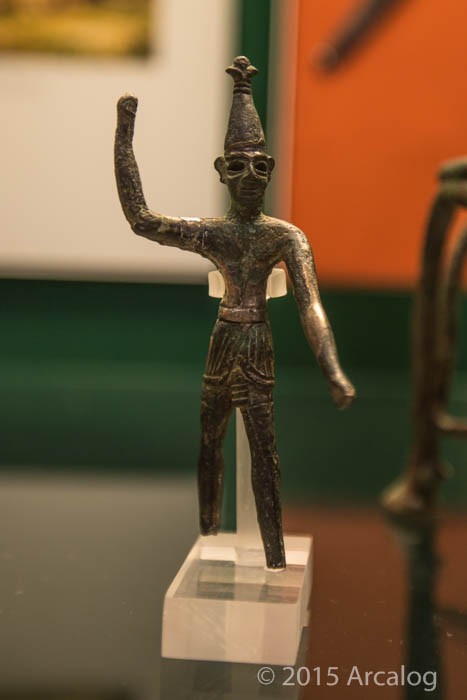
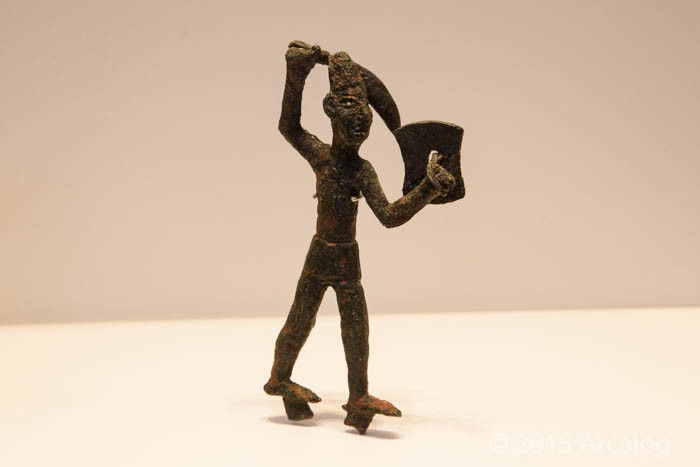
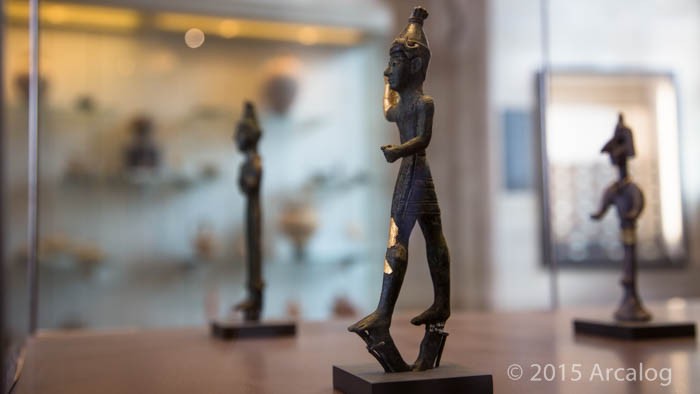
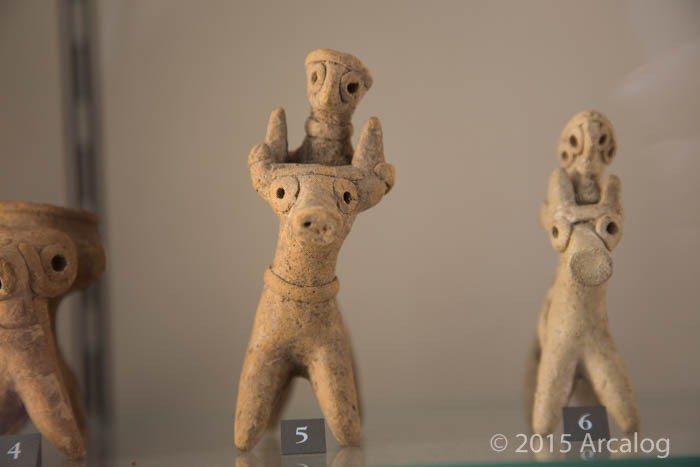
Baal on Mt Carmel

As early as the Late Bronze Age, Egyptian traders called Carmel ‘the holy cape’ and a Greek traveller writing under the pseudonym of Scylax (6th century BC Greek geographer) referred to it as the “promontory of Zeus“.   In the Greek pantheon, Zeus was a mountain and storm deity who dwelled on Mt. Olympus so it was natural for the Greeks to equate Zeus with the Semitic weather god Baal Shamem (Lord of the Heavens) who dwelled on Sapanu (Gk. – Mt Cassius; Heb. – Tsaphon).

The Roman historian Seutonias tells us that Vespasian traveled to Carmel to inquire of ‘the god of Carmel’ before taking up the siege of Jerusalem.

When he consulted the oracle of the god of Carmel in Judaea, the lots were highly encouraging, promising that whatever he planned or wished however great it might be, would come to pass…

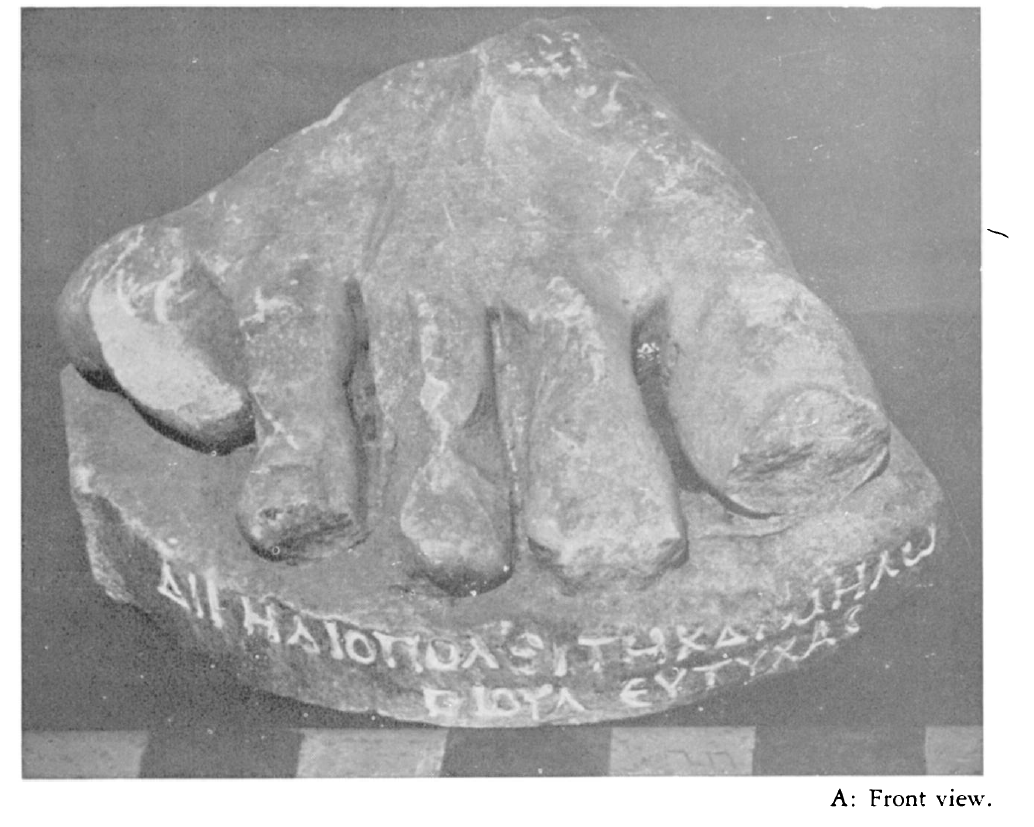
Tacitus also makes references to this event and tells us that there was no temple or statue on Carmel – just an altar.   However, a statue must have been erected at a later date, the pedestal of which was discovered in an ancient monastery located on the top of Carmel.  In the 1950’s M. Avi Yonah published a short article on the statue base discovered among a collection of antiquities belonging to the Carmelite monastery.  The marble statue base dates to the 3rd century AD and would have stood twice life size.

Carmel statue Baal Jupiter Heliopolitanus
The base of a statue of Jupiter Heliopolitanus found near the Carmelite monastery on Mt. Carmel. (Avi Yonah 1959) Based on the size of the foot, the statue would have stood twice life size.   (Avi Yonah, 1952)

The base of the statue contains the following inscription:

(Dedicated) to Heliopolitan Zeus (god of) Carmel (by) Gains lulius Eutychas colonist (of) Caesarea

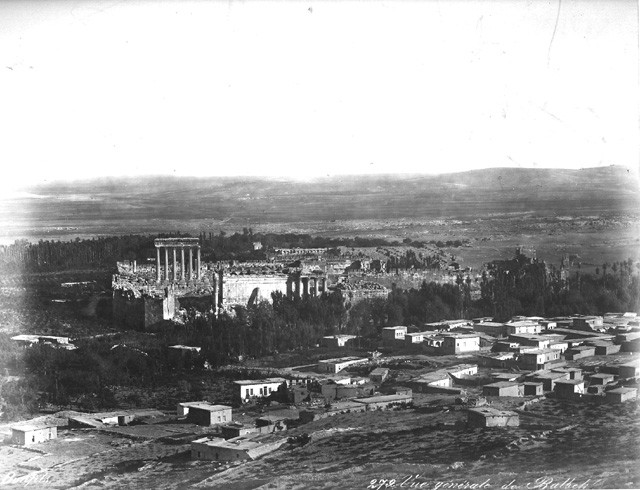
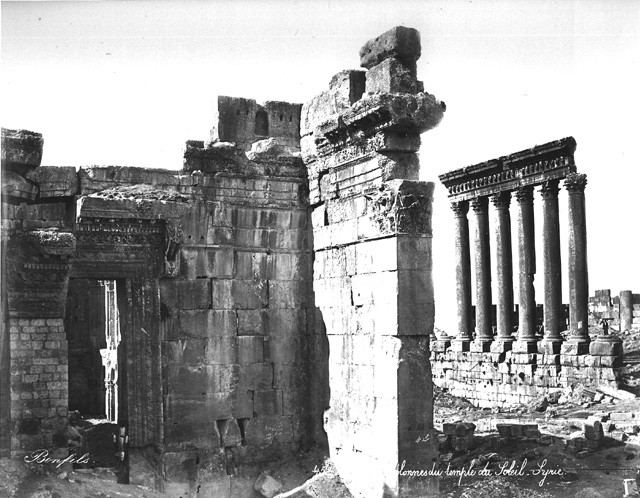
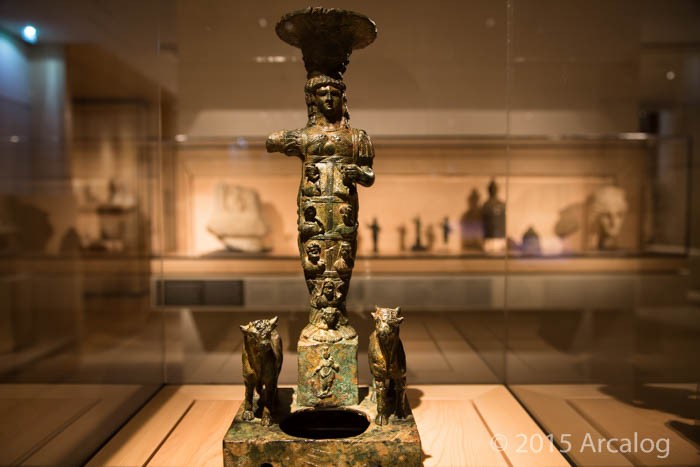
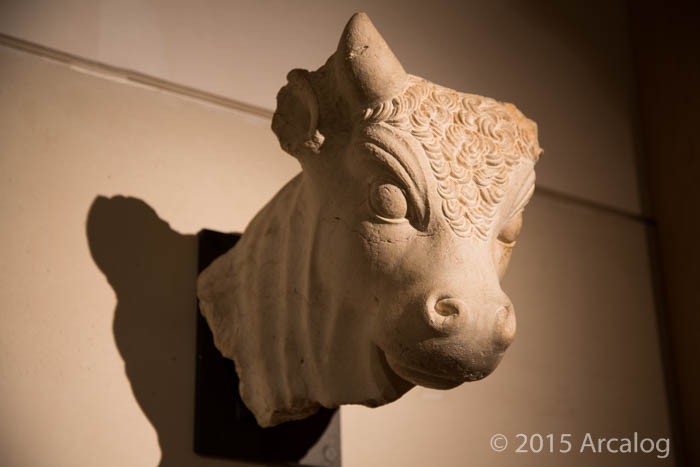
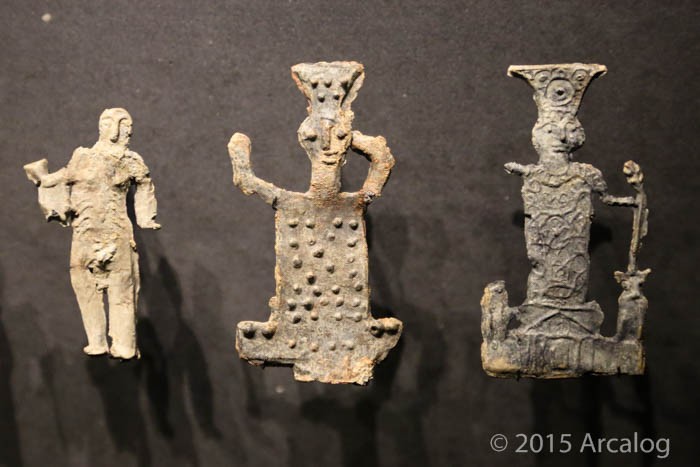
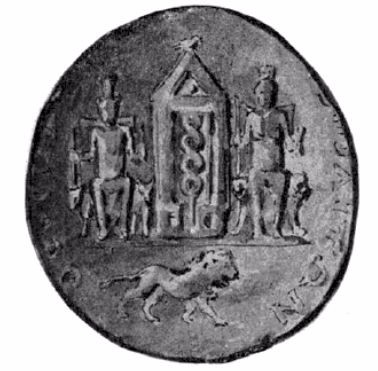
This inscription indicates that Baal, in his Greco-Roman form, the Heliopolitan Zeus, was worshipped on Carmel in the 3rd century AD.    Jupiter was worshipped at Heliopolis (a city in Lebanon aka. Baalbek) alongside the Syrian fertility goddess Atargatis and their son, Mercury.    Thus the Roman colonist who dedicated the statue to Baal of Heliopolis had adopted the god of the region.  This was the usual practice for colonists.

The Bible makes frequent mention of the worship of Baal, although it is sometimes difficult to know when the word is used to refer to the deity and when it is used as a title meaning ‘lord’ or ‘master’. [1] When ‘baal’ appears in the names of Israelites or in their place names, it does not necessarily refer to a foreign deity – although it may!   Baal was not listed among the foreign gods worshipped by Solomon, even though Ashtoreth (as Sidonian goddess) was.  It would seem that only after Baal worship was made a state religion by king Ahab (under the influence of Jezebel, the daughter of the king of Sidon) was the word ‘baal’ consistently used with reference to a foreign deity and it was around this time that Judeans (and perhaps also most Israelites) stopped naming their children with the ephitet ‘baal’.   In the time of Jeremiah, the word often appears in the plural as a generic reference to ‘foreign gods (baalim)’.   At a later date, and only in a few cases, scribes changed the names of people in the Bible who had the theophoric element ‘baal’ in their names by replacing ‘baal’ with ‘boshet’ – which means ‘shame’. Thus Meriv-baal (Baal contends) became Mephiboshet (from the mouth of shame).   This not so subtle emendation was a means of expressing disdain for the thing named.   A similar phenomenon occurred when the Massoretes (9th-10th centuries AD) used the vowels from ‘boset’ (the Hebrew word for shame) and attached them to the names of pagan deities and cultic items.  Some examples of the ‘boset vocalization’ are ‘Molech’, Ashtoreth’, and ‘Tophet’.

The confrontation between Elijah and the prophets of Baal on Carmel provides some information about the nature of Baal worship in Elijah’s day.  Elijah taunts the prophets of Baal by asking them if perhaps their god was perhaps sleeping.  This may be an allusion to Baal’s ‘death’ and subsequent journey to the underworld – an event connected with the disappearance of rain in the summer months.

In order to obtain a favourable answer from Baal, the priests cut themselves in a frenzy with swords and lances ‘as was their custom’.  This custom is likewise referred to in a cuneiform tablet from Late Bronze Age Ugarit.  According to the story recorded on this tablet, when the goddess Anat discovers that Baal, her brother / consort, was dead she began to cut herself in grief.

She [ploughed] her collar-bones,
she turned over like a garden her chest,
like a valley she ploughed her breast.
‘Baal is dead!
What has become of the Powerful One?
The Son of Dagan!
What has become of Tempest?  (Wyatt, 2006)

The practice of cutting is also attested at Syrian temples in the Roman period.  For example, Lucian of Samasota describes how the priests of Atargatis in Hierapolis would cut themselves during a religious festival.  Lucian writes:

On certain days a multitude flocks into the temple, and the Galli in great numbers, sacred as they are, perform the ceremonies of the men and gash their arms and turn their backs to be lashed. Many bystanders play on the pipes the while many beat drums; others sing divine and sacred songs.  (Lucian, De Dea Syria)

Lucian goes on to describe how spectators would sometimes lose control and join in the frenzied worship of the goddess by castrating themselves and then running wildly through the streets!  This was the only way to become a priest (Galli) of the goddess.

Baal worship was just one aspect of a ‘fertility’ religion whose central tenet may be summarized in the Latin phrase do ut des – ‘I give so that you might give’.  The goal of the sacrifice was to get something in return.  Through proper ritual, the priests who officiated in the temple ensured fertility and prosperity of the land.  The proper performance of the ritual was all important. [3]   The degraded nature of Canaanite religion is seen in the fertility rituals that served also for the gratification of lust.  The cult of the state and the fertility cult are both completely humanistic constructs.  But that is the subject for another post.

Footnotes

[1] Likewise, Adon, which means ‘Lord’ was used as an epithet of YHWH.  It also appears as the name of the Greek god Adonis, who was imported from Semites.

[2] Even today, in Papua New Guinea, a relative of the deceased will cut off a finger as a sign of mourning.  More often, they will stage a show of intending to cut off the finger while their friends and family are expected hold them back.

[3] Plutarch writes,

It is usual with the Romans to recommence their sacrifices and processions and spectacles, not only upon such a cause as this [the disruption of a festival], but for any slighter reason.  If but one of the horses which drew the chariots called Tensae, upon which the images of their gods were places, happened to fail and falter, or if the driver took hold of the reins with his left hand, they would decree that the whole operation should commence anew’ and, in later ages, one and the same sacrifice was performed thirty times over, because of the occurrence of some defect or mistake or accident in the service.  Such was the Roman reverence and caution in religious matters.  (Plutarch, Life of Coriolanus)


References

Avi-Yona, M. Mount Carmel and the God of Baalbek. Israel Exploration Journal, Vol. 2, No. 2 (1952), pp. 118-124

Teixidor, Javier, The Pagan God: Popular Religion in the Greco-Roman Near East. Princeton, 1977

Wyatt, N. Religious Texts from Ugarit, Sheffield Academic Press, 2006