I know that the topic of child sacrifice is not exactly light reading – or uplifting. But it is an important topic when it comes to Biblical history, especially as it relates to the Conquest and the Judean Exile. A friend of mine has observed that when we hear of an execution, the first question that usually comes to mind is, “What was the crime?” In the book of Jeremiah, ‘the Crime’ was child sacrifice at Tophet. It also features prominently among the sins attributed to the Canaanites.
But there is another reason why this topic is important. It tends to be one of those match point issues that reveals the rift between those who think that all cultures and religions share the same DNA and have evolved together and those who do not think this.
I’ve spent some time working through a paper I wrote on the subject some time ago and have added some graphics, etc. The paper can be accessed here.
New York – Central Park. Barbaric? The answer is here.
This little story is from Tolstoy’s War and Peace. (Spoiler alert: Don’t read any further if you plan to read the book!) It is about Easter so I thought I would share it here.
——-
Natasha loved to dance and sing, and run barefoot across the grounds of her father’s vast estate. She would accompany her brother on wolf hunts, much to the annoyance of the old boys in the hunting club. And during the long winter nights she and her friends went for rides in their three horse sleigh across the vast, empty steppe, illuminated only by the moon. In short, Natasha loved life. And when Prince Andrey came into her life, she was pretty sure she loved him too. He was known to be a brave officer and a good lord whose reforms made life much easier for his serfs. In short, Prince Andrey was the most eligible bachelor in the land. Natasha was thrilled when he asked her to marry him. It seemed like a perfect match. Everyone thought so. News of their engagement became the gossip of all of Russia. But before they could marry, Prince Andrey was forced to travel abroad for a year. He promised Natasha that the would be married when he returned if she would still have him.
During his absence, Natasha went to St. Petersburg with her father and her friend, Sonya. This was her first time in the city. She thought the opera was absurd with its extravagant costumes and fake smiles. But she was easily swayed by the opinions of others and unconsciously she began to conform to their expectations. Natasha also became aware of the attention of a certain Anatole Kuragin who was undoubtedly the most handsome man she had ever met. Anatole played her like a violin and Natasha was captured. Prince Andrey seemed like a distant mirage when she looked into the passionate eyes of Anatole. She agreed to run off with him but before she could get away, her faithful friend, Sonya, discovered the plot. Horrified at the idea, Sonya pled with Natasha not to go through with it. How could she fall for that awful man! But Natasha had made up her mind. In desperation, Sonya betrayed everything to Agrafena, the strong willed matriarch who was their host in St. Petersberg. Agrafena sent her servants to intercept Anatole at the arranged meeting place and Anatole barely got away with his life. Natasha’s secret love affair was published to the world.
But even then, Natasha remained defiant. She was certain that Anatole would find a way to come for her. It was only when she discovered that Anatole was already secretly married to a Polish girl – a forced marriage – that Natasha began to see Anatole for what he was. And it only got worse. There were rumors that Anatole had maintained an incestuous relationship with his sister – rumors that were probably true. Anatole was both stupid and a coward and everyone seemed to have known it except Natasha. Her defiance turned to complete brokenness. When Prince Andrey returned, she begged him to forgive her but he refused to speak with her and returned all of her letters.
Natasha lay sick in bed for weeks. The words of Agrafena replayed over and over again in her mind, “You have disgraced yourself like the lowest wench!” Her father paid for the very best doctors and paid outrageous sums for the medicine they prescribed but Natasha was wasting away, her spirit crushed.
She did not merely shun every external form of amusement – balls, skating, concerts, and theatres – but she never even laughed without the sound of tears behind her laughter. She could not sing. As soon as she began to laugh or attempted to sing all by herself, tears choked her: tears of remorse; tears of regret for that time of pure happiness that could never return; tears of vexation that she should so wantonly have ruined her young life, that might have been so happy. Laughter and singing especially seemed to her like scoffing at her grief. She never even thought of desiring admiration; she had no impulse of vanity to restrain.
When the week of Lent came around, Agrafena asked Natasha if she would accompany her to the 3 AM service at a distant chapel. No one would see her there. And there Natasha began to pray.
She listened to the words of the service, and tried to follow and understand them. When she did understand them, all the shades of her personal feeling blended with her prayer; when she did not understand, it was still sweeter for her to think that the desire to understand all was pride, that she could not comprehend all; that she had but to believe and giver herself up to God, Who was, she felt, at those moments guiding her soul. She crossed herself, bowed to the ground, and when she did not follow, simply prayed to God to forgive her everything, everything, and to have mercy on her, in horror at her own vileness. The prayer into which she threw herself heart and soul was the prayer of repentance…. It was only at her prayers that she felt able to think calmly and clearly either of Prince Andrey or of Anatole, with a sense that her feelings for them were as nothing compared with her feeling of worship and awe of God… the joy of “communication,” as Agrafena Ivanovna liked to call taking the Communion, seemed to her so great that she fancied she could not live till that blissful Sunday [Easter].
But the happy day did come. And when on that memorable Sunday Natasha returned from the Sacrament wearing a white muslin dress, for the first time for many months she felt at peace, and not oppressed by the life that lay before her.
The countess and the doctors didn’t understand what happened to Natasha. They thought that is was the powders the doctors had prescribed.
The doctor came that day to see Natasha, and gave directions for the powders to be continued that he had begun prescribing a fortnight ago. “She must certainly go on taking them morning and evening,” he said, with visible and simple-hearted satisfaction at the success of his treatment. “Please, don’t forget them. You may set your mind at rest, countess,” the doctor said playfully, as he deftly received the gold in the hollow of his palm. “She will soon be singing and dancing again. The last medicine has done her great, great good. She is very much better.” The countess looked at her finger-nails and spat, to avert the ill-omen of such words, as with a cheerful face she went back to the drawing room.
But it wasn’t the powders. Natasha had learned how to forgive and be forgiven.
Tolstoy alludes to one of the central themes of the Bible. Natasha is as innocent as Eve before she falls for Anatole. But when Anatole captures her heart, she becomes unyielding and cruel. We hardly believe that it is the same girl we met with earlier in the novel. Our reaction is one of horror because we already know what a bad character Anatole is. Run away Natasha! And that was exactly the message of the prophets and apostles who saw beyond appearances to the spiritual reality that lies at the center of all life.
“Who has heard the like of this? The virgin Israel has done a very horrible thing.” (Jer 18:13)
Israel has forsaken the fount of living waters and hewed out cisterns for themselves that do not hold water.
The words of Agrafena tore at Natasha’s soul.
So I will be to them like a Lion, Like a Leopard I will lurk beside the way. I will fall upon them like a bear robber of her cubs, I will tear open their breast, And there I will devour them like a lion, As a wild beast would rend them. (Hosea 13:4-8)
Natasha’s parents sent for the best doctors in St Petersburg but the doctors do not have the power to heal the soul.
“Is there no balm in Gilead? Is there no physician there?”
Why then has the health of the daughter of my people not been restored?
Natasha begins to recover only when she learns to pray. And it was only through the encouragement of Agrafena, whose words had seemed so cruel.
Come let us return to the Lord; For he has torn, that He may heal us; He has stricken, and he will bind us up. After two days He will revive us; On the third day He will raise us up, That we may live before Him. Let us know, let us press on to know the Lord; His going forth is sure as the dawn; He will come to us as the showers; As the spring rains that water the earth. (Hosea 5:16-6:3)
The third day became the eighth day. Resurrection Sunday arrived. Natasha takes the sacrament believing that the atoning sacrifice of Christ has taken away her sin and that, in Christ, she too is raised up to a new life. When Natasha leaves the church she is wearing a white dress and for the first time she is smiling and laughing again. Spring has arrived, and a gentle rain waters the earth.
Again I will build you, and you shall be built, O virgin Israel! Again you shall adorn yourself with tambourines and shall go forth in the dance of the merrymakers. Jer. 31:4
Therefore, behold, I will allure her, and bring her into the wilderness, and speak tenderly to her. And there I will give her her vineyards and make the Valley of Achor a door of hope. And there she shall answer as in the days of her youth, as at the time when she came out of the land of Egypt. (Hos 2:14-15)
May we also find the peace and joy that comes from knowing Christ, our atoning sacrifice.
Why did Napoleon invade Russia in 1812? Tolstoy tries to answer this question in his novel of the war:
We are forced to fall back upon fatalism in history to explain irrational events (that is those of which we cannot comprehend the reason). The more we try to explain those events in history rationally, the more irrational and incomprehensible they seem to us. Every man lives for himself, making use of his free-will for attainment of his own objects, and feels in his whole being that he can do or not do any action. But as soon as he does anything, that act, committed at a certain moment in time, becomes irrevocable and is the property of history, in which it has a significance, predestined and not subject to free choice.
There are two aspects to the life of every man: the personal life, which is free in proportion as its interests are abstract, and the elemental life of the swarm, in which a man must inevitably follow the laws laid down for him.
Consciously a man lives on his own account in freedom of will, but he serves as an unconscious instrument in bringing about the historical ends of humanity. And as an act he has once committed is irrevocable, and that act of his, coinciding in time with millions of acts of others, has an historical value. The higher a man’s place in the social scale, the more connections he has with others, and the more power he has over them, the more conspicuous is the inevitability and predestination of every act he commits. ” The hearts of kings are in the hand of God.” The king is the slave of history.
When the apple is ripe and falls-why does it fall? Is it because it is drawn by gravitation to the earth, because its stalk is withered, because it is dried by the sun, because it grows heavier, because the wind shakes it, or because the boy standing under the tree wants to eat it? (L. Tolstoy, War and Peace)
We are all on the same train and though we are free to read, sleep, or play cards, we cannot get off the train. Our thoughts and actions are ultimately the product of the age we live in. Not even the king can rise above the spirit of the Age. He is its slave! Tolstoy makes allowance for human choice, but only in a limited way. Ultimately, we are swept up in a series of unguided events over which we have no control. We are in the hands of fate!
I wonder how Tolstoy would answer another question that belongs to history: Why did Nebuchadnezzar attack Jerusalem in 586 BC? Was Judah simply in the wrong place at the wrong time, a small kingdom in the path of a steamroller? Certainly, that is not how the Judean prophets understood their plight. Jeremiah declares,
Hear and give ear; be not proud,
for the LORD has spoken.
Give glory to the LORD your God
before he brings darkness,
before your feet stumble
on the twilight mountains,
and while you look for light
he turns it into gloom
and makes it deep darkness. Jeremiah 13: 15-16
Jeremiah echoes the words of Isaiah spoken to king Ahaz a century earlier, “If you do not stand in faith, you will not stand at all!” Israel and her king were expected to go against the spirit of the age, to reject idolatry, and give glory to God. To borrow Tolstoy’s metaphor, they were to fly like geese and not swarm like insects. Israel’s failure to do so meant that they were absorbed into world empire. They became a part of the swarm.
Much of Israel’s history is measured against their adherence to the Law but the Biblical writers do not always equate suffering with sin. Here are just a few examples:
The suffering of the Israelites in Egypt is never attributed to their sin. Nor is their salvation credited as a reward for obedience. It is not even clear that the people cried out to God for deliverance. In Exodus it says that the people “cried out in their distress and their cry came up to God.” This is a departure from the normal formula of “and the people cried out to God in their distress” that we find else where. (Ex 2:23 – cf. Deut. 26:7).
The lesson from Job is that suffering may come from God, not as a punishment, but to test us. Job did not know about the Satan or the cause of his suffering. Throughout the book, Job expresses his desire to speak to God directly and plead his case. In the end, he gets his wish, and is overwhelmed by the majesty of God. If Job had not suffered, would he have seen the wonders of God?
There are many Psalms that speak of the righteous persecuted without cause.
Deliver my soul from the wicked… O LORD, from men of the world whose portion is in this life. You fill their womb with treasure; they are satisfied with children, and they leave their abundance to their infants. As for me, I shall behold your face in righteousness; when I awake, I shall be satisfied with your likeness. (Psa 17:13-1 ESV)
Jesus said that the people who died after a tower in Siloam collapsed on them were not any worse than others in Jerusalem (their death was not the consequence of sin) but those listening would perish because of their sin if they did not repent. Likewise, in response to a question from the Pharisees as to the reason a man was born blind, Jesus replied that it was neither because of this man’s sin, nor his parents, but that the power of God may be revealed. That the innocent might suffer does not seem to have occurred to these Pharisees.
Sometimes suffering is a consequence for sin and sometimes it just happens and we are not sure why. And we must decide whether we will cry out to God or curse our Fate.
For now they will say, “We have no King for we do not fear the LORD. And as for the king, what can he do to us?” (Hos 10:3)
Hosea does not equate anarchy with a failure of the state, but with atheism. Likewise, Isaiah links atheism with indifference toward morality in general.
Now therefore hear this, you lover of pleasures, who sitsecurely, who say in your heart, “I am, and there is no one besides me…”
You felt secure in your wickedness, you said, “No onesees me”; your wisdom and your knowledge led you astray, and you said in your heart,“I am, and there is no one besides me.” (Isaiah 47:8,10)
In Greece, we find philosophical schools that were radically skeptical in their outlook. One such school was founded by Pyrro of Elis (mid 4th century BC) after he spent time among the gymnosophists (naked philosophers) of India. According to Aristocles (2nd century AD), Pyrro claimed that a thing ‘is’ or it ‘is not’ or it both ‘is’ and ‘is not’! Basically, Pyrro sought to suspend judgement on everything – including the nature and existence of God. It is perhaps no coincidence that the Greeks learned radical skepticism from India. Eastern religion in general, takes ultimate reality to be ‘Nothingness’ which fits nicely with a radically skeptical view of the world.
With time, radical skepticism emerged at the center of western civilization although not until relatively late. Atheism did not fair well in Europe during the Middle Ages. Even as late as the turn of the 19th century, one could not be overtly atheist in a university in Germany. In what has been called the ‘Atheism Dispute’, the German philosopher Fichte was accused of teaching atheism and forced to give up his teaching position at the University of Jenna (1798-1800). Fichte had reduced God to an impersonal universal order. His views are perhaps best summarized in the lines from Schiller’s Worte des Glaubens which Fichte quotes at the conclusion of one of his philosophical treatises.
“And God is!—a holy Will that abides,
Though the human will may falter;
High over both Space and Time it rides,
The high Thought that will never alter:
And while all things in change eternal roll,
It endures, through change, a motionless soul.” (source)
In an open letter to Fichte, F.H. Jacobi warned that Fichte’s philosophy ultimately leads to ‘nihilism’. (Atheism Dispute) Jacobi recognized that Fichte’s philosophical system was essentially pantheistic. According to the pantheistic view of the cosmos, the world is not ‘created’ but rather ’emanates’ from an impersonal and unknowable Source. (ie. the Ein Sof of Kaballah or the Tao of Taoism) In contrast, Jacobi emphasizes that God is the Creator and is “outside of me, a living being…” Jacobi writes,
If the highest upon which I can reflect, what I can contemplate, is my empty and pure, naked and mere ego, with its autonomy and freedom… then rationality is for me a curse – I deplore my existence.
…the human being loses himself as soon as he resists finding himself in God as his creator… Everything then gradually dissolves before him into his own Nothingness. But the human being has such a choice, this single one: Nothingness or a (sic) God. Choosing Nothingness, he makes himself into God, that is, he makes an apparition into God because if there is no God, it is impossible that man and everything which surrounds him is not merely an apparition. I repeat: God is, and is outside of me, a living being, existing in itself, or I am God. There is not a third. (F.H. Jacobi, translated by Diana Buhler, https://www.scribd.com/doc/252185532/Jacobi-Open-Letter-to-Fichte#download)
Jacobi expresses a Christian epistemology. God may be known, although never comprehended. Our knowledge of God is not like the knowledge we have of a ‘thing’. It is rather the kind of knowledge shared between two persons that is capable of growing and maturing into a certainty that has nothing to do with scientific probabilities. Jacobi emphasizes this personal aspect of ‘knowing God’ in the conclusion to his open letter to Fichte,
Hail to the human being who constantly feels this presence, for whom that old assertion: By the living God! Is in every moment the highest archetype of truth. Whoever touches the sacred and noble simplicity of this belief with a corrupting hand, he is an adversary of the human race; because neither science nor art, nor any other talent, whatever name it might have, would compensate for what had been taken from it. (F.H. Jacobi, translated by Diana Buhler, https://www.scribd.com/doc/252185532/Jacobi-Open-Letter-to-Fichte#download)
We have come a long ways from the ‘Atheism Dispute’ of the 19th century. Now, at the turn of the 21st century, 27.5% of professors in biology or psychology are atheists (Huffington Post), and many of our governing officials are de facto atheists. But Jacobi’s words still ring true. What atheists seek to take away cannot be replaced by “science or art, or any other talent.”
Adah and Zillah, listen to my voice… I have killed a man for wounding me, a young man for striking me. If Cain’s revenge is sevenfold, then Lamech’s is seventy-sevenfold.” (Gen 4:23-24 ESV)
A mere boy struck me, so I will crush him like an ant. Lamech could be a gangsta rapper, with Adah and Zillah hanging on each arm.
Better watch how you talk, when you talk about me
‘Cause, I’ll come and take your life away…
I’m the diamond in the dirt, that ain’t been found
I’m the underground king and I ain’t been crowned
When I rhyme, something special happen every time
I’m the greatest, something like Ali in his prime…
I walk the block with the bundles
I’ve been knocked on the humble
Swing the ox when I rumble
Show your ass what my gun do
Got a temper nigga, go ahead, lose your head
Turn your back on me, get clapped and lose your legs
I walk around gun on my waist, chip on my shoulder
Till I bust a clip in your face, pussy, this beef ain’t over…
50 Cent – Many Men – MetroLyrics
Lamech is the prototypical ‘great man’ – which is a literal translation of the Sumerian word for king, ‘lugal’. His boast has been repeated by kings throughout history. The same spirit moved the king of Babylon strike the peoples “with unceasing blows” and rule the nations “in anger with unrelenting persecution.” (Isa 14:6 ESV) The same spirit moved Halel to boast, “I will rise, I will ascend, I will make myself like the Most High.” It is the spirit of the Antichrist who would create a world empire that stands in opposition to the kingdom of God. The gods of this world are the gods of State; the object of their worship is Power; and their loftiest aspiration is to Conquer – even up to heaven.
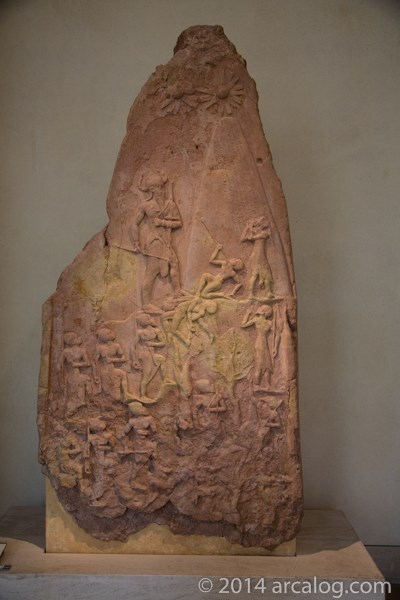
The god-king Naram Sin climbs the cosmic mountain, trampling his enemies under his feet. This victory stele, dating to the 3rd millennium BC, is a vivid depiction of the boast of Halel, (Lat. Lucifer), “I will ascend above the heights of the clouds, I will make myself like the Most High.” (Is 14:13-14) (Louvre)
One of the interesting questions of history is, “When did humility become a virtue?” If we let Nietzsche answer that question, he will tell us “with Christianity”.
What is good? All that enhances the feeling of power, the Will to power, and power itself in man. What is bad? – All that proceeds from weakness. What is happiness? – The feeling that power is increasing – that resistance has been overcome. Not contentment, but more power; not peace at any price, but war; not virtue, but efficiency (virtue in the Renaissance sense, virtue, free from all moralic acid). The weak and the botched shall perish: first principle of our humanity. And they ought even to be helped to perish. What is more harmful than any vice? – Practical sympathy with all the botched and the weak – Christianity. (Nietzsche, The Antichrist)
Nietzsche finds much that is admirable in the old pagan religions. He was one of the early modern philosophers who romanticized Nature and made it into an Idol. The struggle for survival became the ‘will to Power’ and all of the savagery of this world was deemed natural and necessary. Christianity, on the other hand, suppresses our natural instincts and is therefore to be despised. Well, Nietzsche was right that Christianity is unnatural. Jesus said, “You must be born again.” (John 3:3; cf. 1 Cor. 2:14; 15:50) [1] But he was wrong that Christianity is weak. Real Christianity, as Wilberforce liked to call it, is the only power in the world that has the moral will to oppose a modern day Sennacherib because only Christianity makes real moral outrage possible. [2] Love may be expressed in absolute fury more terrible than anything produced by the lust for conquest and glory. It is the fury of a husband or father who would defend his family.
Heinrich Heine, the 19th century German poet and philosopher, saw clearly what was at stake with the rising popularity of a new form of pantheism in Germany. He was not particularly religious although he came to faith in Christ towards the end of his life. [3] But earlier in his career, he wrote a book titled “On the History of Religion and Philosophy in Germany”. In it he describes, with almost prophetic insight, the ultimate result of natural philosophy in Germany.
…the Philosopher of Nature will be terrible in this, that he has allied himself with the primitive powers of nature, that he can conjure up the demoniac forces of old German pantheism; and having done so, there is aroused in him that ancient German eagerness for battle which combats not for the sake of destroying, not even for the sake of victory, but merely for the sake of the combat itself. Christianity—and this is its fairest merit —subdued to a certain extent the brutal warrior ardor of the Germans, but it could not entirely quench it; and when the cross, that restraining talisman, falls to pieces, then will break forth again the ferocity of the old combatants, the frantic Berserker rage whereof Northern poets have said and sung so much. The talisman has become rotten, and the day will come when it will pitifully crumble to dust. The old stone gods will then arise from the forgotten ruins and wipe from their eyes the dust of centuries, and Thor with his giant hammer will arise again, and he will shatter the Gothic cathedrals. . . .
Smile not at my counsel, at the counsel of a dreamer, who warns you against Kantians, Fichteans, Philosophers of Nature. Smile not at the fantasy of one who foresees in the region of reality the same outburst of revolution that has taken place in the region of intellect. The thought precedes the deed as the lightning the thunder. German thunder is of true German character: it is not very nimble, but rumbles along somewhat slowly. But come it will, and when ye hear a crashing such as never before has been heard in the world’s history, then know that at last the German thunderbolt has fallen. At this commotion the eagles will drop dead from the skies and the lions in the farthest wastes of Africa will bite their tails and creep into their royal lairs. There will be played in Germany a drama compared to which the French Revolution will seem but an innocent idyll. At present, it is true, everything is tolerably quiet; and though here and there some few men create a little stir, do not imagine these are to be the real actors in the piece. They are only little curs chasing one another round the empty arena, barking and snapping at one another, till the appointed hour when the troop of gladiators appear to fight for life and death… (Heine 1882, 167)
Heine understood that the changes he observed taking place peacefully in Germany would eventually lead to war. I wonder where the quiet but rapid transformation of North American society will lead down the road? The lightning of thought precedes the thunder of action.
Many men, many, many, many, many men
Wish death upon me, Lord I don’t cry no more
Don’t look to the sky no more, have mercy on me
Have mercy on my soul, somewhere my heart turned cold…
50 Cent – Many Men – MetroLyrics
Footnotes
[1] The highest virtue in the Roman world was to attain honor and glory for oneself. But Jesus taught that a man must lose his life before he can find it. God cares about the poor and the despised and is more pleased with the widows mite than with all the treasure in the temple. The essence of the Sermon on the Mount is found already in the words of the prophet Micah, “He has shown you, oh man, what is good and what the LORD requires of you. But to do justice, and to love mercy, and walk humbly with your God.” These words of Micah were as radically different in tone and outlook from the religious texts of the Assyrians as the words of Jesus were from the philosophizing of the Epicureans and Stoics.
[2] This moral outrage is found in passages like Isaiah 30, the book of Revelation, or the imprecatory Psalms. Regarding the latter, C.S. Lewis notes that there is really nothing like them in ancient literature. He writes,
If the Jews cursed more bitterly than the Pagans this was, I think, at least in part because they took right and wrong more seriously. For if we look at their railing we find they are usually angry not simply because these things have been done to them but because these things are manifestly wrong, are hateful to God as well as to the victim. The thought of the “righteous Lord” – who surely must hate such doings as much as they do, who surely therefore must (but how terribly He delays!) “judge” or avenge, is always there, if only in the background.” (Lewis 1958, 31)
[3] Heine was born to Jewish parents, and converted to Christianity. In the final prologue to his book “Religion and Philosophy in Germany”, written, I think, shortly before his death, Heine says: “In my latest book, “Romancero” I have explained the transformation that took place within me regarding sacred things. Since its publication many inquiries have been made, with zealous importunity, as to the manner in which the true light dawned upon me. Pious souls thirsting after a miracle, have desired to know whether, like Saul on the way to Damascus, I had seen a light from heaven; or whether, like Balaam, the son of Beor, I was riding on a restive ass, that suddenly opened its mouth and began to speak as a man? No; ye credulous believers, I never journeyed to Damascus… nor have I ever seen an ass, at least any four-footed one, that spake as a man, though I have often enough met men who, whenever they opened their mouths, spake as asses. In truth, it was neither a vision, nor a seraphic revelation, nor a voice from heaven, nor any strange dream or other mystery that brought me into the way of salvation; and I owe my conversion simply to the reading of a book. A book? Yes, and it is an old, homely-looking book, modest as nature and natural as is; a book that has a work-a-day and unassuming look, like the sun that warms us, like the bread that nourishes us; a book that seems to us as familiar and as full of kindly blessing as the old grandmother who reads daily in it with dear, trembling lips, and with spectacles on her nose. And this book is called quite shortly—the Book, the Bible. Rightly do men also call it the Holy Scripture; for he that has lost his God can find Him again in this Book, and towards him that has never known God it sends forth the breath of the Divine Word.
References
Lewis, C. S. (1958). Reflections on the Psalms. New York,, Harcourt.
Nietzsche, F. W. (2004). Twilight of the idols ; and, The Antichrist. Mineola, N.Y., Dover Publications.
Heinrich, H. The Religion and Philosophy of the Germans, http://www.archive.org/stream/religionandphilo011616mbp/religionandphilo011616mbp_djvu.txt
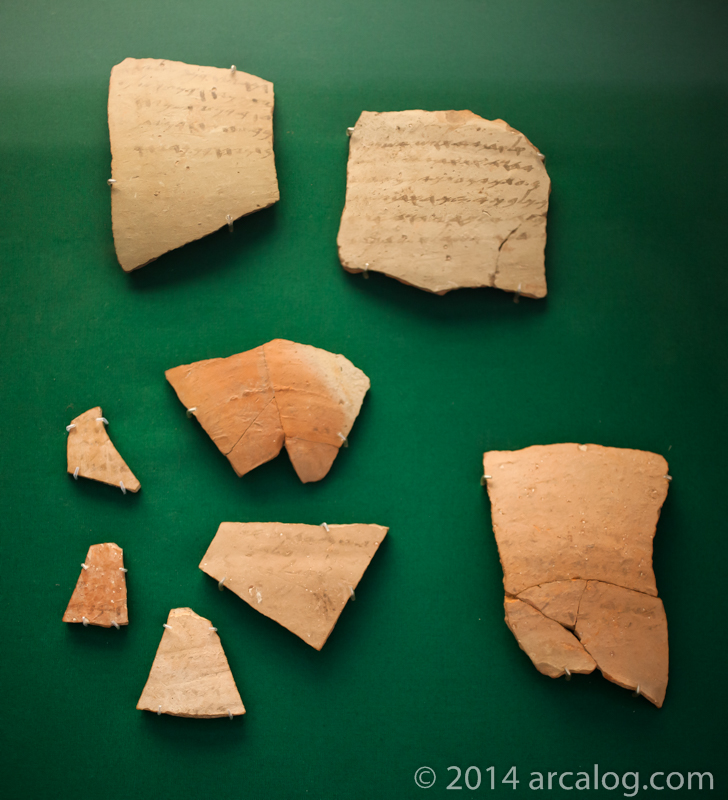
There is haunting letter discovered by archaeologists in the ruins of Lachish. It was written on a pottery shard by the commander of a outpost during the time of Babylonian invasion of Judah. In the letter, the commander reports,
we are watching for the signal-stations of Lachish, according to all the signals you are giving, because we cannot see the signals of Azekah. (Lachish Letter IV)
Azekah is gone! You can almost feel the dread of those final days in the lines of the letter. And we are next! The enemy is at the gate and, at any moment, he will be in our house, taking everything from us.
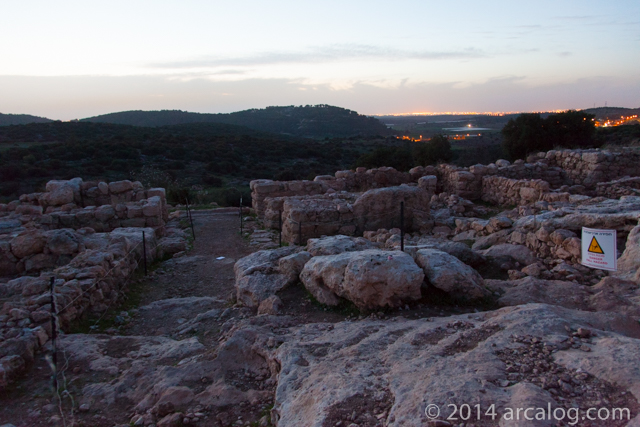
Azekah is the most prominent hill in the back ground. The ruins of K. Keifa are in the fore ground. Looking west with the lights of Tel Aviv on the horizon.
I think Isaiah had a situation similar to that of Azekah in mind when he said, “How beautiful on the hill are the feet of him who brings good news! Who publishes peace, who brings good news of happiness, who says to Zion, Your God reigns!” Isaiah had prophesied the Assyrian invasion, and lived to see it happen, but his message was ultimately one of peace.
“All men are like grass and all their glory is like the flowers of the field…” says the prophet, “But the word of our God is eternal”. Go up and proclaim it on a high hill! Shout it out! Do not be afraid! The glory of the LORD shall be revealed and all men will see it together. Behold your God!
And so too, John begins his Gospel with the Word who was made flesh and dwelt among us. We beheld his glory, John says, full of grace and truth.
Glory to God in the highest, and on earth, peace to men on whom his favor rests.
Merry Christmas!
The Lachish Letters (British Museum)Tel Lachish looking south
Read this in one of Tozer’s sermons this morning. It kind of relates to the last post.
…the desire to please men is back of all social acts from the highest civilizations to the lowest levels upon which human life is found. No one can escape it. The outlaw who flouts the rules of society and the philosopher who rises in thought above its common ways may seem to have escaped from the snare, but they have in reality merely narrowed the circle of those they desire to please. The outlaw has his pals before whom he seeks to shine; the philosopher his little coterie of superior thinkers whose approval is necessary to his happiness. For both, the motive root remains uncut. Each draws his peace from the thought that he enjoys the esteem of his fellows, though each will interpret the whole business in his own way. Every man looks to his fellowmen because he has no one else to whom he can look.
Tozer goes on to speak of how man can escape the ‘tyranny of social approval’.
When, to intimidate him, Athanasius’ judges warned him that the whole world was against him, he dared to reply, “Then is Athanasius against the world!” That cry has come down the years and today may remind us that the gospel has power to deliver men from the tyranny of social approval and make them free to do the will of God.
Sartre: “I believe that the thinking of the group is where the truth is. …I have thought this way since childhood. I always considered group thinking to be better than thinking alone. …I don’t believe a separate individual to be capable of doing anything.” (143: pp. 170-171 as cited by Sharafevich)
The Lord Jesus: “Enter through the narrow gate. For wide is the gate and broad is the road that leads to destruction, and many enter through it. (Mat 7:13 NIV)
Sartre: “The sacrificial type is narrow-minded by nature. …This is a monstrous type. All my life I have fought against the spirit of sacrifice.” (143: pp. 170-171 as cited by Sharafevich)
The Lord Jesus: Whoever finds their life will lose it, and whoever loses their life for my sake will find it. (Mat 10:39 NIV)
Christianity offers an escape from the ‘drone’ mentality because it teaches that each man must stand alone before God at the end of his life and answer to God alone for his deeds.
References
Shafarevich, I. (1980). The Socialist Phenomenon. http://www.robertlstephens.com/essays/shafarevich/001SocialistPhenomenon.html
One gets the impression that the life of a peasant in ancient Babylon was essentially that of a worker bee. The hive was the temple or the palace. Peasants were allotted a piece of land to work, and were required to bring a certain amount of the produce to the temple or palace. This wasn’t a tithe – it was a rent. The land was allotted by the ruler and could be taken away by the same. Every acre of land, every pig and goat, was counted – and belonged to the state. 1
A similar state of affairs existed in Egypt in the Ptolemaic period. We know from the detailed records of the Ptolemies that absolutely everything was recorded. 2 One did not own a goose without the notice and approval of the State. These detailed records were kept as a means of taxation. It is true that at times, the power of nobles increased and that of the ruler diminished, but this decentralization never reached beyond the nobles to the commoner (someone who does not benefit directly from the patronage of the king). 3
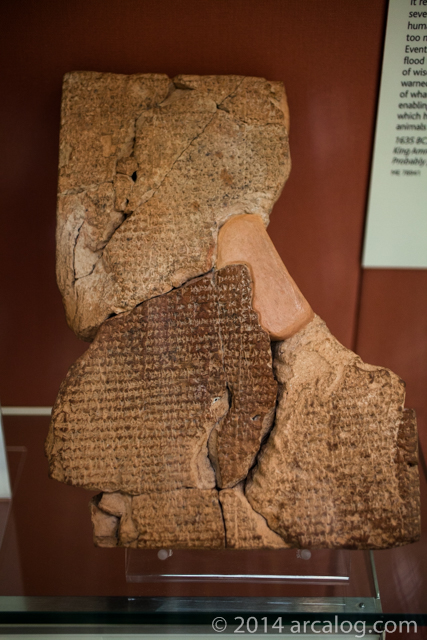
The Atrahasis Epic cements a hierarchy in the divine realm that was mirrored in the human realm. In the beginning, lesser gods were made to clear canals and plow fields for the higher gods. At the top of the pyramid was Enlil, the king of the gods. When the lesser gods rebelled against Enlil because of their backbreaking labour, Enlil created mankind to do the work that the lesser gods did not want to do! Thus man was made to toil on behalf of the gods, or rather conveniently, on behalf of the king who was the gods representative here on earth. The natural sense of superiority felt by Mesopotamian kings is perhaps revealed in the epithet they used to refer to their subjects – ‘the black headed people…’.
From the reign of King Ammisaduqa of Babylon (1635 BC) – probably from Sippar – The British Museum
David Berman points out that In Genesis, the common man is elevated to the place reserved only for the king in Mesopotamia. For example, in the Mesopotamian Atrahasis Epic, man is created to toil in the fields so that the lesser gods don’t have too. In Genesis man is created to have dominion over the earth. 4 Early modern philosophers such as John Locke latched onto this idea by arguing that philosophy and science were not intended to be the preserve of an elite but that every man was created to have ‘dominion over the earth’ – a turn of phrase that they equated with science.
Just as Genesis ascribes dignity to the individual, so too, the Pentateuch safeguarded the liberties of the common man. These safeguards are found in the economic, religious and political spheres of life. This view of man found in Genesis is complemented by legislation contained in the Pentateuch that was designed to safeguard the liberty of the common man. These liberties may be divided into three categories: economic, religious and social.
Economic: Land is allotted according to clan and family. It is not owned by the state, and therefore, cannot be appropriated by king or noble (ie. Naboth’s vineyard). The year of Jubilee was intended to safeguard this decree, recognizing that a tendency exists over time for capital to accumulate into fewer and fewer hands.
Religious: Israel was to be a kingdom of priests. In practical terms, this meant that every male in Israel was to be circumcised (a stricture that was confined only to the priesthood in Egypt) and was to appear before the LORD at the appointed time. Thus each Israelite had a role to play in the temple service. This is in striking contrast to Mesopotamia, where the common man had nothing to do with the temple service.
Political: When the time came for Israel to choose a king, they were commanded to choose one from ‘among your own brothers.’ The king was not accorded a supernatural pedigree. Neither did the law originate with the king.
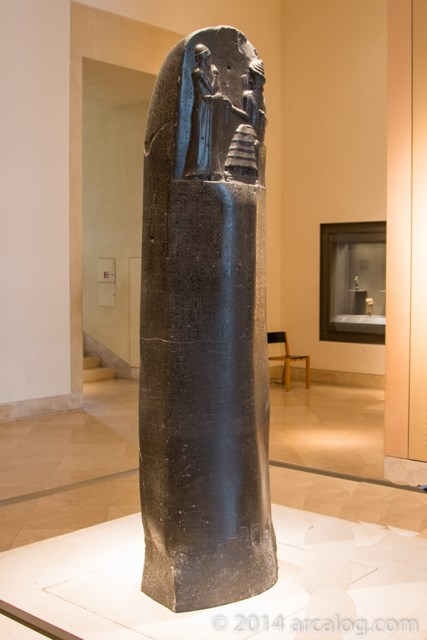
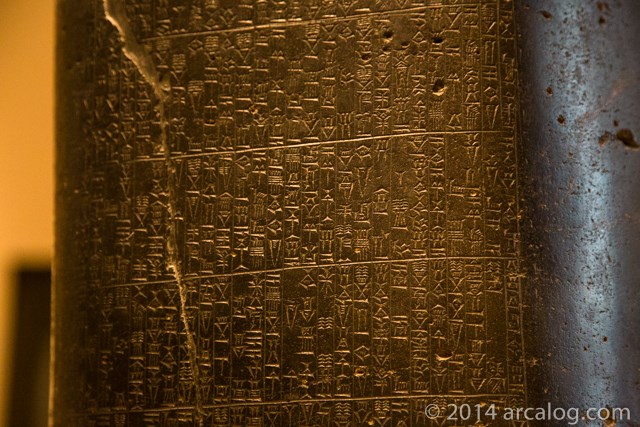
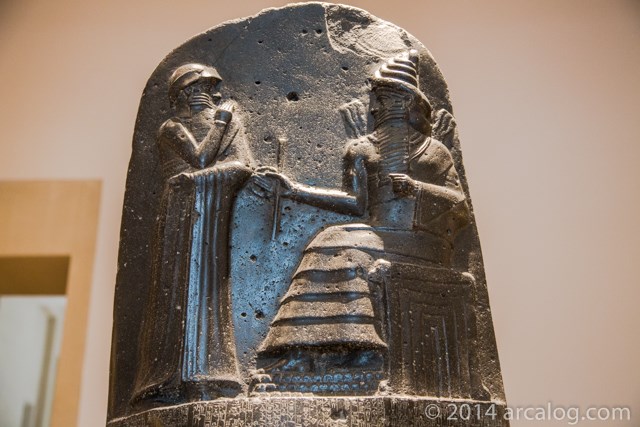
The importance of the individual in the laws of the Pentateuch is rooted in the nature of the covenant given on Sinai. This covenant was made between God and the people and not between God and the Ruler. This is in contrast to the role played by the king as recorded in the Code of Hammurabi. In the prologue, Hammurabi makes it clear that he was ‘formed in perfection’ by the goddess Mama to rule the people.5 He concludes his laws by stating that these where his ‘precious words’ inscribed on the stela.6 Hammurabi claims to be prayerful and humble before the gods. But in turn, the people, must be prayerful and humble before him!
The power of the king in Israel was limited by the power and influence of the priest and the prophet. In Assyria, the king was also the High Priest, and therefore, absolute sovereign. And there is no evidence that the diviners and fortune tellers of Assyria ever dared to censure the king. How different this was from prophets of Israel who earned the title of ‘enemy’ of the state and a ‘troubler’ of the kingdom. 7
Footnotes:
Oppenheim writes, “Land seems to have been held in the south either by the great organizations or by private absentee owners living the cities who usually rented it out to poor tenant farmers. Farmers who lived on their own fields are the exception. (Oppenheim, A. L. and E. Reiner (1977). Ancient Mesopotamia : portrait of a dead civilization. Chicago, University of Chicago Press. pg. 87) Oppenheim notes that Babylon was often identified with a corrupt economic system in the Old Testament. So too, in the New! ↩
Tcherikover writes, “The Ptolemies had one aim throughout their domination in Egypt-to wring from the country’s inhabitants as much as they could in money and labor… The king drew especially large profits from a system of monopolies. Nearly all edibles, such as salt, olive oil, honey and fish, as well as woolens and flax, blankets, cushions, towels and linens, all sorts of drugs and cosmetics, gold and silver ornaments, papyrus and the like-all were made and sold under the supervision of government officials, and a severe penalty threatened anyone daring to infringe upon the king’s profits…. Such were the elements of the Ptolemaic kingdom, which may therefore justly be described in modern terms as a “totalitarian state.” ↩
Tcherikover writes, “Ptolemaic policy in Palestine was conducted in two contradictory directions. On the one hand, the Ptolemies saw that it was impossible to rule the country according to the principles of complete absolutism preavalent in Egypt. Instead of the monotonous uniformity of a peasant population inured to a life of servitude- apicture characteristic of Ptolemaic Egypt-they found in Syria numerous peoples and tribes each holding to an ancestral tradition (sometimes a tradition both rich and ancient) and aspiring to an independent development. (Tcherikover, V. (1999). Hellenistic civilization and the Jews. Peabody, Mass., Hendrickson Publishers. pg 14 ff.) ↩
Berman, J. (2008). Created equal : how the Bible broke with ancient political thought. Oxford ; New York, N.Y., Oxford University Press. pg. 22 ↩
Devout god-fearing prince… who rises “like the sun over the people of this land”…”humble and prayerful… the king with superior understanding who heeded Shamash… god among kings, master of insight… lord fully meriting scepter and diadem, whom Mama, midwife (of the gods), formed in perfection… devout and prayerful to the great gods, scion of Sumu-lael, mighty heir to Sin-muballit, of royal lineage eternal, mighty king, sun god of Babylon who caused light to come out upon the land of Sumer and Akkad… [5. Foster, B. R. (2005). Before the muses : an anthology of Akkadian literature. Bethesda, Md., CDL Press., 129-130) ↩
“I have inscribed my precious words upon my stela and set it up before the statue of me, King of Justices, in Babylon… my words are carefully chosen, my capability unrivalled. By the command of Shamash, the great judge of heaven and earth, may my justice show forth in all lands. By the word of Marduk, my lord, may my ordinances find none who will set them aside. (Foster, Before the Muses, 129-130) ↩
The critiques of power found in the OT are all the more remarkable when we consider that most ancient texts were commissioned by kings and read like royal propaganda. It is true that Aristophanes critiques Cleon in his plays but this is many centuries later in Greece at a time when literacy was widespread. ↩
…Grace to you and peace, from Him who is (ὁ ὢν) and who was and who is to come… (Rev 1:4-5 NAS)
The word translated ‘him who is’ (ὁ ὢν) is not proper Greek, but is the exact word used in the Septuagint to translate the Divine Name revealed in Exodus 3:14. (1) The Apostle John is clearly making a connection between the two.
God said to Moses, “I AM WHO I AM.” (Grk. – ἐγώ εἰμι ὁ ὤν) And he said, “Say this to the people of Israel, ‘I AM (ὁ ὢν) has sent me to you.'” (Exo 3:14 ESV)
There has been some debate about what is the best translation of the phrase I AM WHO I AM. The form of the verb is in the imperfect (Heb. – ‘ahieh asher ahieh’), and so some think it is better to translate the phrase ‘I will be what I will be’ or “I will cause to be what I will cause to be’ . However, the traditional translation – ‘I AM WHO I AM’ – receives strong support from the Septuagint where both the participle and the verb used in the translation of ‘I am that I am‘ are in the present tense. This translation is further bolstered by the apostle John who, as we have seen, interprets the clause ‘I AM WHO I AM’ to be the totality of existence.
‘from him who is and who was and who is to come…’
‘I am that I am…’
Footnotes:
(1) The NET Bible notes point out that the antecedent of the preposition ‘apo’ is usually in the genitive and never the nominative. But here in Rev. 1:4 and again in Rev. 1:8, the antecedent of the preposition ‘apo’ is in the nominative form (ὁ ὢν). If one looks at this from a purely grammatical perspective, then the author seems to have made a grammatical mistake but when one looks at the context, it is clear that John intends to connect his use of the word with the Divine Name revealed in Exo. 3:14.